
How to Reduce Tonneau Cover Warranty Claims and After-Sales Problems
For wholesalers, distributors, and retailers, selling a tonneau cover is only the beginning of the business relationship.
The real challenge often starts after installation.
A customer reports water leakage. Another says the retractable cover is difficult to operate. Someone finds debris inside the track. Another customer claims the cover has stopped working after several months.
Not every after-sales problem is caused by a manufacturing defect.
In our experience, installation quality, improper use, lack of maintenance, and unclear customer instructions can account for a significant portion of avoidable tonneau cover complaints.
This is why we believe that reducing warranty claims starts before the product reaches the end user. A good B2B supplier should provide not only a reliable tonneau cover, but also practical maintenance guidance that dealers can pass on to customers.
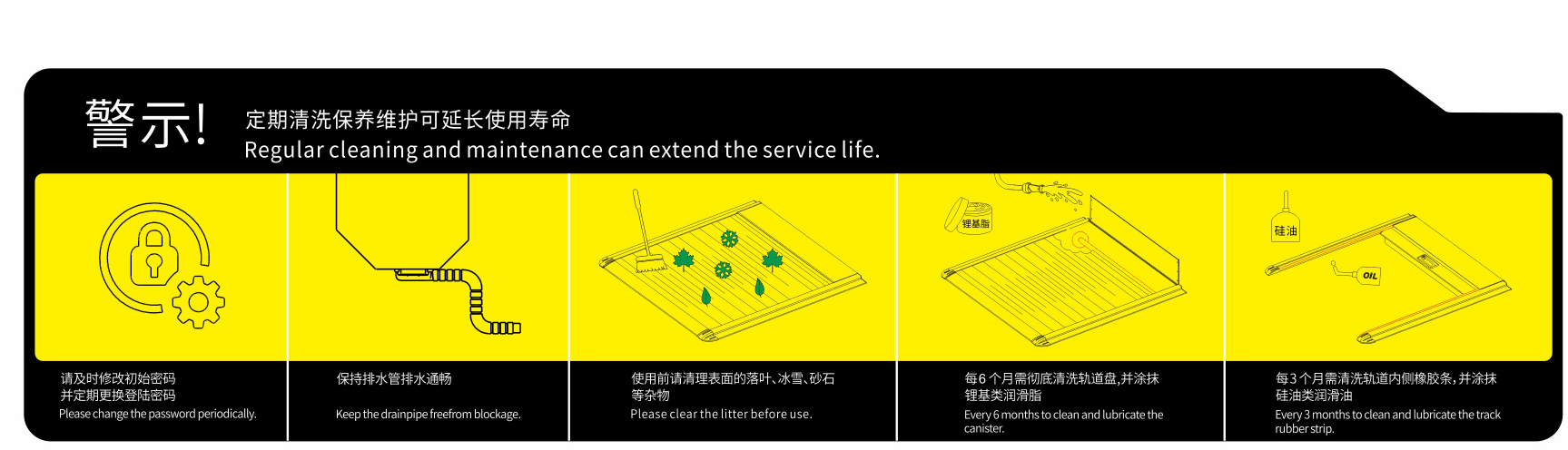
The following maintenance routine is based on the daily-use guidance shown in the supplied maintenance diagram and can be used as part of a dealer’s after-sales strategy.
Why Tonneau Cover Maintenance Matters for B2B Buyers
For an individual truck owner, a maintenance issue may be a small inconvenience.
For a retailer or distributor selling hundreds or thousands of tonneau covers, it can become a business problem.
A single product complaint may involve:
- Customer communication
- Troubleshooting
- Replacement parts
- Shipping costs
- Technician time
- Return processing
- Warranty evaluation
- Negative reviews
- Loss of customer confidence
This means after-sales cost should be considered when evaluating a tonneau cover supplier.
In my opinion, the cheapest tonneau cover is not necessarily the most profitable product for a distributor.
A better calculation is:
Product cost + installation cost + warranty risk + after-sales cost + customer satisfaction
A supplier that helps dealers prevent common problems can ultimately provide more value than a supplier that simply offers the lowest factory price.
1. Start With Correct Installation
One of the most effective ways to reduce tonneau cover warranty claims is to make sure the product is installed correctly from the beginning.
A retractable tonneau cover usually contains multiple components, including:
- Side rails
- Drain pipes
- Retractable slats
- Canister
- Locking mechanisms
- Sealing strips
- Moving components
If one component is misaligned during installation, problems may appear later.
For example, incorrect rail alignment can potentially cause:
- Uneven movement
- Increased friction
- Difficulty opening or closing
- Abnormal noise
- Poor sealing
- Premature component wear
Our recommendation for dealers
Before delivering the vehicle to the customer, installers should check:
- Whether both side rails are properly aligned
- Whether the cover moves smoothly
- Whether the locking system works correctly
- Whether the drainage system is connected properly
- Whether the seals are correctly positioned
- Whether the cover opens and closes without abnormal resistance
A few additional minutes during installation can prevent much longer troubleshooting later.
2. Keep the Drain Pipes Free From Blockage
One of the maintenance points shown in the supplied diagram is particularly important:
Keep the drainpipe free from blockage.
A retractable tonneau cover can encounter rainwater, dust, leaves, mud, sand, and other debris during normal truck use.
If the drainage pipe becomes blocked, water may not flow away as intended.
This can create customer complaints that are sometimes incorrectly described simply as a “leaking tonneau cover.”
How dealers can explain this to customers
Customers should periodically check the drain outlets and make sure:
- Dirt is not blocking the opening
- Leaves and debris are removed
- The drainpipe is not bent or compressed
- Water can flow freely through the drainage system
This is a simple maintenance task, but it can make a significant difference to the long-term user experience.
For retailers, it is also an excellent item to include in the installation handover checklist.
3. Remove Debris Before Retracting the Cover
The supplied maintenance diagram also highlights an important daily-use principle:
Clear litter, ice, sand, and other debris before operating the cover.
This may seem obvious, but it is one of the easiest maintenance recommendations for customers to overlook.
Pickup trucks are frequently used in environments where debris can accumulate around the truck bed.
Examples include:
- Sand
- Gravel
- Leaves
- Mud
- Snow
- Ice
- Small stones
If these materials enter the moving area or track, they can increase resistance during operation.
For a manual retractable tonneau cover, this may make the cover harder to pull.
For an electric retractable tonneau cover, excessive resistance can potentially place additional stress on the operating system.
A simple rule for customers
Before opening or closing the tonneau cover, check the track and moving area.
If there is ice, sand, dirt, or other debris, clean it first.
This is one of the easiest preventive measures a dealer can communicate to customers.
4. Clean and Lubricate the Canister Every Six Months
The maintenance diagram recommends:
Clean and lubricate the canister every 6 months.
For retractable tonneau covers, the canister is an important area because the cover retracts into this housing.
Over time, dust and other particles can accumulate.
Regular cleaning helps keep the retracting area in better condition.
After cleaning, suitable lubrication can help maintain smoother movement of the relevant components.
Why is this important for retailers?
Because many customers only think about maintenance after something starts making noise or becomes difficult to operate.
By then, the customer may already believe there is a product defect.
A better approach is preventive maintenance.
We recommend that dealers tell customers to treat tonneau cover maintenance similarly to other vehicle accessories:
Don’t wait for a problem before performing basic maintenance.
5. Clean the Track and Rubber Strip Every Three Months
According to the supplied maintenance guide, the track and rubber strip should be cleaned approximately every three months, with silicone oil applied to the rubber strip.
This is particularly relevant because the side track is exposed to the outside environment.
Dust, dirt, sand, and other contaminants can accumulate around the moving area.
The rubber strip also plays an important role in sealing and smooth operation.
Recommended maintenance routine
Every three months:
- Clean the track
- Remove accumulated dirt and debris
- Inspect the rubber strip
- Clean the rubber surface
- Apply appropriate silicone-based lubricant to the rubber strip
This simple routine can help maintain the sealing and operating condition of the cover.
6. Don’t Ignore Snow and Ice
For markets with cold winters, snow and ice deserve special attention.
A customer may try to operate a retractable tonneau cover while ice has accumulated on the surface or inside the moving area.
That can create unnecessary resistance.
The better approach is:
Remove snow and ice before operating the cover.
This is particularly important for distributors selling tonneau covers in regions with cold climates.
When evaluating a supplier, B2B buyers should consider whether the manufacturer provides practical operating instructions for different environments—not just a generic product specification sheet.
7. Keep the Rubber Seals in Good Condition
Weather resistance depends on more than the aluminum cover itself.
Rubber seals are critical components of the overall sealing system.
Over time, seals may be exposed to:
- UV radiation
- Rain
- Snow
- Dust
- Temperature changes
- Cleaning chemicals
Regular inspection can help identify:
- Cracks
- Deformation
- Hardening
- Detachment
- Excessive wear
If a customer reports water entering the truck bed, the dealer should not immediately assume that the entire tonneau cover has failed.
The first step should be to inspect the sealing system, drainage path, installation alignment, and surrounding components.
This is an important point for reducing unnecessary warranty replacements.
8. Create a Simple Tonneau Cover Maintenance Schedule
For retailers and distributors, a maintenance schedule is easier for customers to follow than a long technical manual.
Here is a practical version based on the supplied maintenance guidance:
| Maintenance Item | Recommended Frequency | Purpose |
|---|---|---|
| Check/change access password | Periodically | Improve security |
| Check drain pipes | Regularly | Prevent blockage |
| Remove debris, ice and sand | Before use | Reduce operating resistance |
| Clean and lubricate canister | Every 6 months | Maintain smooth operation |
| Clean track | Every 3 months | Remove dirt and debris |
| Clean rubber strip | Every 3 months | Maintain sealing condition |
| Apply silicone oil to rubber strip | Every 3 months | Maintain rubber flexibility |
For commercial customers or vehicles operating in particularly dusty, muddy, snowy, or coastal environments, more frequent cleaning may be appropriate.
For daily maintenance, you can refer to this video: https://youtu.be/-BXknrBO8a8?si=KpPK6CJDXf35lntV
9. Not Every Warranty Claim Is a Product Defect
This is an important distinction for B2B buyers.
When a customer reports a problem, the first question should not always be:
“Should we replace the product?”
Instead, dealers should first determine the source of the problem.
A useful troubleshooting process is:
Step 1: Check installation
Was the cover installed correctly?
Step 2: Check operation
Does the cover move smoothly?
Step 3: Check the track
Is there sand, dirt, ice, or another obstruction?
Step 4: Check drainage
Are the drainpipes blocked?
Step 5: Check seals
Are the rubber strips correctly installed and in good condition?
Step 6: Check lubrication
Has the product received the recommended maintenance?
Step 7: Check components
Only after these basic checks should the dealer determine whether a component may require replacement under warranty.
This approach can prevent unnecessary product returns.
10. Why After-Sales Support Should Be Part of Supplier Selection
When choosing a tonneau cover manufacturer, many distributors compare:
- Unit price
- MOQ
- Product specifications
- Packaging
- Lead time
These are important.
But I strongly recommend adding one more category:
After-sales support.
Ask the supplier:
- Is there a clear warranty policy?
- Are replacement parts available?
- Can the supplier provide installation instructions?
- Can they provide maintenance instructions?
- Can technical problems be diagnosed remotely?
- Can they supply photos or videos for troubleshooting?
- How quickly can warranty parts be shipped?
For B2B buyers, a supplier that provides reliable after-sales support can be much more valuable than one that simply offers a lower quotation.
11. Premium Quality Can Reduce the Cost of After-Sales Service
This connects directly with the previous article topic: What Makes a Premium Aluminum Tonneau Cover Worth the Higher Price?
Premium quality is not simply about making the product more expensive.
It should be about improving the entire ownership experience.
Important factors include:
- Consistent aluminum quality
- Reliable structural design
- Effective sealing
- Smooth retracting performance
- Accurate fitment
- Quality rubber components
- Good drainage
- Reliable locking mechanisms
- Consistent manufacturing
- Clear installation instructions
When these elements work together, the likelihood of avoidable problems can be reduced.
Of course, no manufacturer can honestly promise zero warranty claims.
But a well-designed product combined with proper installation and maintenance can create a much more manageable after-sales experience.
12. Why Bestwyll Focuses on More Than the Product Itself
At Bestwyll, we believe that a successful tonneau cover business requires more than supplying a product.
It requires a combination of:
Product quality + installation support + maintenance guidance + replacement parts + responsive after-sales service.
With more than 20 years of experience in the pickup accessory industry, our approach is to develop products for real-world pickup applications and international B2B markets.
Our retractable tonneau covers are designed with features such as aluminum construction, weather sealing, practical drainage systems, and user-oriented operation.
For distributors, wholesalers, and retailers, we also understand that the product needs to be supported after the sale.
That means helping partners reduce avoidable problems, handle warranty cases more efficiently, and build customer confidence in their product line.
Conclusion: Preventing Problems Is Better Than Handling Complaints
For tonneau cover distributors and retailers, warranty claims should not be treated as an unavoidable cost of doing business.
Many common after-sales problems can be addressed through a combination of:
Correct installation + customer education + regular cleaning + proper lubrication + drainage maintenance + timely troubleshooting.
The maintenance routine is simple:
- Keep drainpipes clear
- Remove ice, sand, and debris before operation
- Clean and lubricate the canister every 6 months
- Clean the track every 3 months
- Clean and maintain the rubber strip every 3 months
- Use suitable silicone oil on the rubber strip
- Inspect the product regularly
The bigger lesson for B2B buyers is this:
The best tonneau cover supplier is not necessarily the one offering the lowest unit price. It is the supplier that helps you sell a reliable product and manage the entire product lifecycle more efficiently.
When product quality, maintenance guidance, replacement parts, and after-sales support are considered together, distributors can reduce unnecessary warranty costs while building a stronger reputation for their business.
And ultimately, fewer complaints mean more time spent selling—and more satisfied customers coming back for their next truck accessory.