
Can a Tonneau Cover Work with a Ladder Rack or Cross Bar? What Distributors Should Know
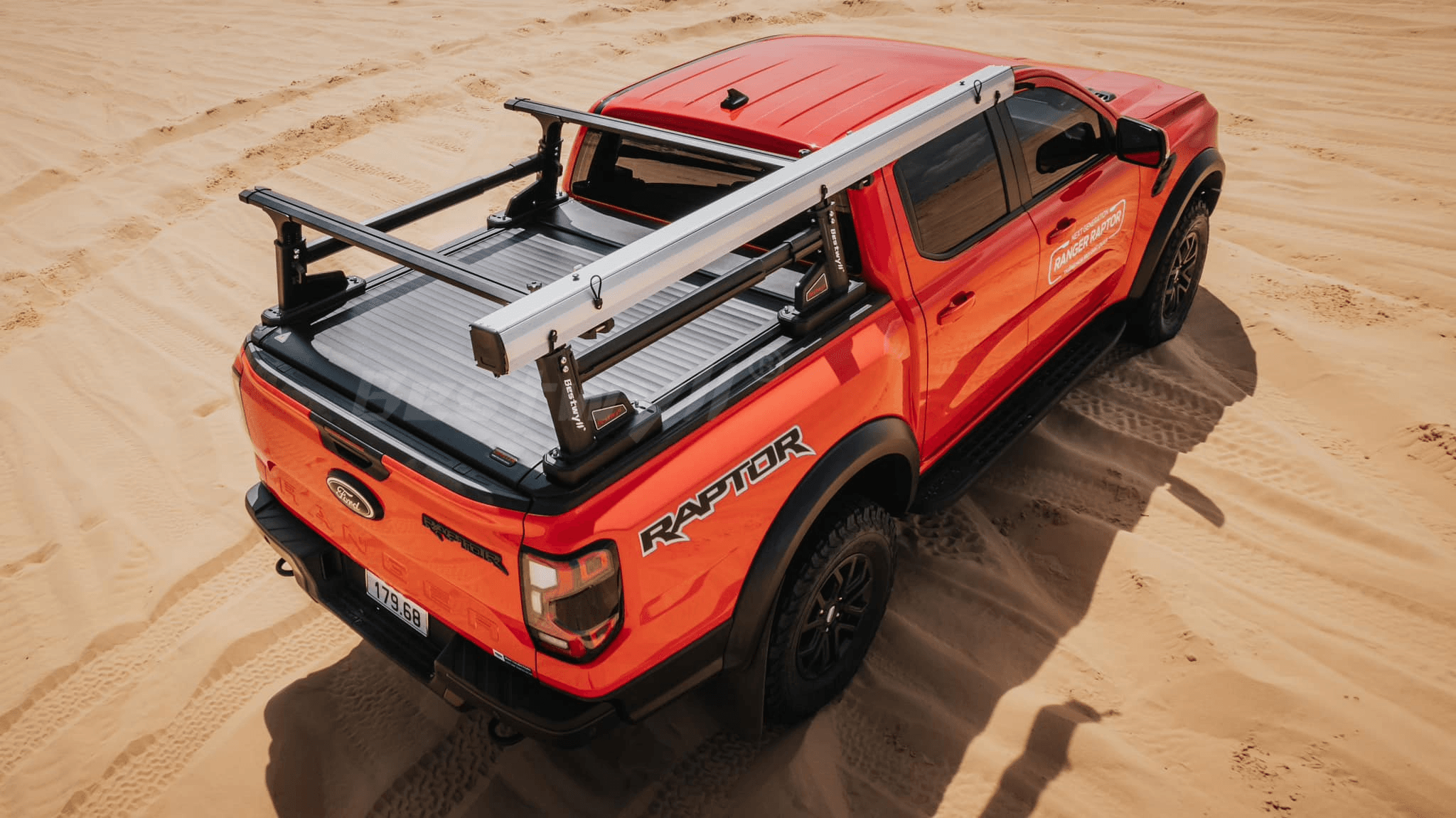
For pickup truck accessory distributors and retailers, customers increasingly want more than a tonneau cover.
They want to protect their cargo while carrying ladders, bicycles, kayaks, camping equipment, roof boxes, or other oversized gear. This creates an important question for both buyers and sellers:
Can a tonneau cover work with a ladder rack or cross bar?
The short answer is yes—but compatibility depends heavily on the tonneau cover design, mounting system, truck bed configuration, and rack structure.
For distributors, this is more than a technical question. It can directly affect product selection, installation, customer satisfaction, cross-selling opportunities, and after-sales costs.
In our experience with pickup accessories, one of the most common mistakes B2B buyers make is evaluating a tonneau cover and truck rack as two completely independent products. If customers are likely to use both, the compatibility between the two products should be considered before placing a bulk order.
Why Tonneau Cover and Ladder Rack Compatibility Matters
A tonneau cover protects the truck bed.
A ladder rack or cross bar expands the truck’s cargo-carrying capability.
On paper, these products serve different purposes. In practice, many pickup owners want both.
For example, a contractor may need:
- A covered truck bed for tools
- A ladder rack for ladders
- Cross bars for long materials
- Secure storage for equipment
An outdoor enthusiast may want:
- A tonneau cover for luggage
- Cross bars for bicycles
- A rack for camping equipment
- Additional space for outdoor gear
This means a distributor that sells compatible products can offer a much more complete solution.
Instead of selling:
Tonneau Cover
you can potentially sell:
Tonneau Cover + Cross Bar + Ladder Rack
That creates a higher-value product package and gives retailers more opportunities for additional sales.
1. Not Every Tonneau Cover Is Compatible With Every Rack
This is the first point distributors should understand.
The fact that a tonneau cover and ladder rack are individually compatible with a pickup truck does not automatically mean they are compatible with each other.
The problem usually comes down to the mounting points.
A tonneau cover may use:
- Side rails
- Clamps
- Bed-rail mounting systems
- Tracks
- Brackets
- Internal mounting structures
A ladder rack may also need to occupy some of these areas.
If both products require the same mounting location, installation can become difficult—or impossible.
Therefore, when sourcing products, distributors should ask the supplier a more specific question:
“Is this tonneau cover designed to work with this type of ladder rack or cross bar?”
That question is much more useful than simply asking whether both products fit the same pickup model.
2. Retractable Tonneau Covers Can Offer More Integration Possibilities
Retractable tonneau covers are particularly interesting for customers who need both cargo protection and external carrying capacity.
Because the cover retracts into a canister rather than folding across the entire truck bed, the available bed space can remain more flexible.
However, the design of the side rails and mounting system is still critical.
A well-designed retractable tonneau cover may incorporate mounting grooves or interfaces that allow compatible accessories such as cross bars or ladder racks to be installed without interfering with the cover’s operation.
This is an area where product engineering makes a significant difference.
From a distributor’s perspective
I would not recommend choosing a retractable tonneau cover first and trying to find a compatible rack afterward.
A better approach is:
Select the tonneau cover and rack as a system.
This can significantly reduce compatibility problems later.
3. The Mounting System Is the Key
When evaluating compatibility, one of the first things distributors should inspect is the mounting system.
Ask:
Where does the tonneau cover mount?
Does it use the top of the bed rail?
Does it clamp underneath the bed rail?
Does it require a specific side rail?
Where does the rack mount?
Does the rack use:
- Bed rail clamps?
- Dedicated brackets?
- Stake pockets?
- Fixed mounting points?
- Truck-specific brackets?
Do the two systems interfere?
If both products need the same space, you may have a problem.
This is why technical drawings and installation diagrams can be extremely useful when evaluating a supplier.
A product photo may look compatible, while the actual mounting dimensions tell a completely different story.
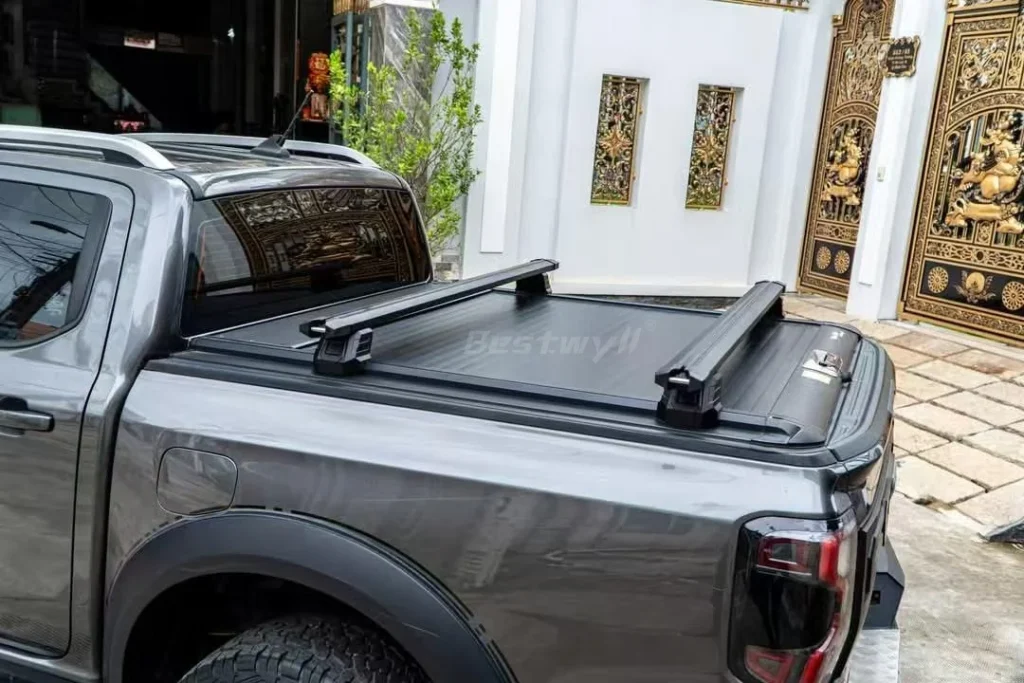
4. Cross Bars and Ladder Racks Are Not Exactly the Same
Another important distinction for retailers is the difference between a cross bar and a ladder rack.
A cross bar is generally a horizontal load-carrying bar.
It can be used for:
- Bicycles
- Outdoor equipment
- Long cargo
- Roof boxes
- Kayaks
- Camping equipment
A ladder rack is usually a more substantial structure designed for larger or longer loads such as:
- Ladders
- Pipes
- Timber
- Construction materials
- Long tools
Therefore, the load requirements and mounting structure can be very different.
For distributors, product positioning should reflect the intended use rather than simply using “truck rack” as a general term.
5. Load Capacity Must Be Evaluated Carefully
Compatibility is not only about whether the rack can be physically installed.
It is also about whether the entire system can safely support the intended load.
Distributors should check:
- Maximum rack load
- Dynamic load capacity
- Static load capacity
- Mounting strength
- Cross-bar material
- Bracket construction
- Truck bed limitations
- Manufacturer’s recommended application
For example, carrying a bicycle is very different from carrying several ladders or construction materials.
A retailer should never assume that a strong-looking cross bar automatically has a high load capacity.
The manufacturer’s tested specifications should be used when determining the appropriate application.
6. Aluminum Construction Can Be Valuable for Cross Bars
For pickup accessories, aluminum is often an attractive material for cross bars because it can provide a useful balance between weight and strength.
A quality aluminum cross bar can offer:
- Lower weight
- Good corrosion resistance
- Strong structural performance
- Clean appearance
- Long-term outdoor usability
For distributors selling premium pickup accessories, material quality can also support a higher-value product positioning.
But again, “aluminum” alone should not be used as the quality standard.
The alloy, profile design, wall thickness, joints, brackets, and manufacturing process all influence actual performance.
7. A No-Drill Installation System Can Be a Major Selling Point
Installation is one of the most important considerations for aftermarket truck accessories.
Many pickup owners do not want permanent modifications to their vehicles.
A no-drill installation can therefore make a tonneau cover or rack significantly easier to sell.
Potential advantages include:
- Faster installation
- Less installation labor
- Lower risk of vehicle damage
- Easier removal
- Better DIY customer experience
For retailers, this can also reduce installation time in the workshop.
However, distributors should confirm that both the tonneau cover and rack can be installed correctly together without drilling, rather than assuming that because one product is drill-free, the complete system is also drill-free.
8. The Tonneau Cover Must Still Operate Normally
This sounds obvious, but it is often overlooked.
After installing a ladder rack or cross bar, the tonneau cover should still:
- Open smoothly
- Close smoothly
- Lock correctly
- Maintain its intended sealing
- Retract without interference
- Remain accessible for cargo loading
The rack should not put pressure on the tonneau cover or interfere with moving components.
For retractable covers, the clearance around the side rails and canister is especially important.
Our practical recommendation
When evaluating a new combination, don’t only check whether the two products can be installed.
Actually operate the tonneau cover after installation.
Open it.
Close it.
Retract it.
Lock it.
Check the seals.
This simple test can reveal compatibility problems that are difficult to see in a product catalog.
9. Product Bundles Can Increase Average Order Value
For wholesalers and distributors, compatible products can also create useful bundle strategies.
Bundle 1: Work Truck
Retractable Tonneau Cover + Ladder Rack
Ideal for:
- Contractors
- Construction workers
- Tradespeople
- Commercial users
Bundle 2: Outdoor Pickup
Tonneau Cover + Cross Bars
Suitable for:
- Cycling
- Camping
- Kayaking
- Outdoor travel
Bundle 3: Premium Pickup
Electric Retractable Tonneau Cover + Heavy-Duty Cross Bar
This combination can target customers who prioritize:
- Convenience
- Technology
- Appearance
- Cargo flexibility
This type of product architecture can help retailers move away from pure price competition.
10. Why This Matters When Building a Product Line
For a distributor, the ideal supplier is not necessarily the company with the largest number of individual products.
It may be the supplier capable of creating compatible product families.
For example:
Tonneau Cover
↓
Cross Bar
↓
Ladder Rack
↓
Canopy
↓
Running Board
A coordinated product range gives retailers more opportunities to serve different pickup applications.
It also creates opportunities for repeat purchases.
A customer may initially buy a tonneau cover and later return for a cross bar, ladder rack, or other accessory.
That is a much stronger long-term business model than selling one isolated product.
11. Why Bestwyll’s Integrated Pickup Accessory Approach Matters
Bestwyll focuses on a range of pickup accessories, including retractable tonneau covers, truck canopies, ladder racks, cross bars, and electric running boards.
For distributors and retailers, this broader product range creates opportunities to develop compatible accessory combinations rather than sourcing every product from a different supplier.
Our heavy-duty cross bar solutions are designed around practical pickup applications and can be used together with compatible retractable tonneau cover configurations or as standalone products.
For B2B customers, this can simplify product sourcing while creating opportunities for:
- Product bundling
- OEM/ODM projects
- Private-label development
- Cross-selling
- Vehicle-specific solutions
- Broader pickup accessory portfolios
Conclusion: Compatibility Is a Business Opportunity, Not Just a Technical Detail
So, can a tonneau cover work with a ladder rack or cross bar?
Yes—but the products need to be designed or selected for compatibility.
For distributors and retailers, the most important factors to evaluate are:
- Mounting position
- Side-rail design
- Rack structure
- Load capacity
- Installation method
- Tonneau cover operation
- Sealing performance
- Vehicle-specific fitment
- Supplier testing and technical support
The biggest mistake is to treat compatibility as an afterthought.
Instead, consider the complete system from the beginning:
Tonneau Cover + Cross Bar + Ladder Rack = More Cargo Flexibility + More Selling Opportunities
For retailers, this can increase average order value.
For wholesalers, it can help build a more competitive product portfolio.
For distributors, it can create a stronger long-term accessory strategy.
And for the end customer, the benefit is simple: one pickup that can protect cargo underneath while carrying more equipment above.