
Heavy-Duty Cross Bar vs. Regular Cross Bar: What’s the Difference?
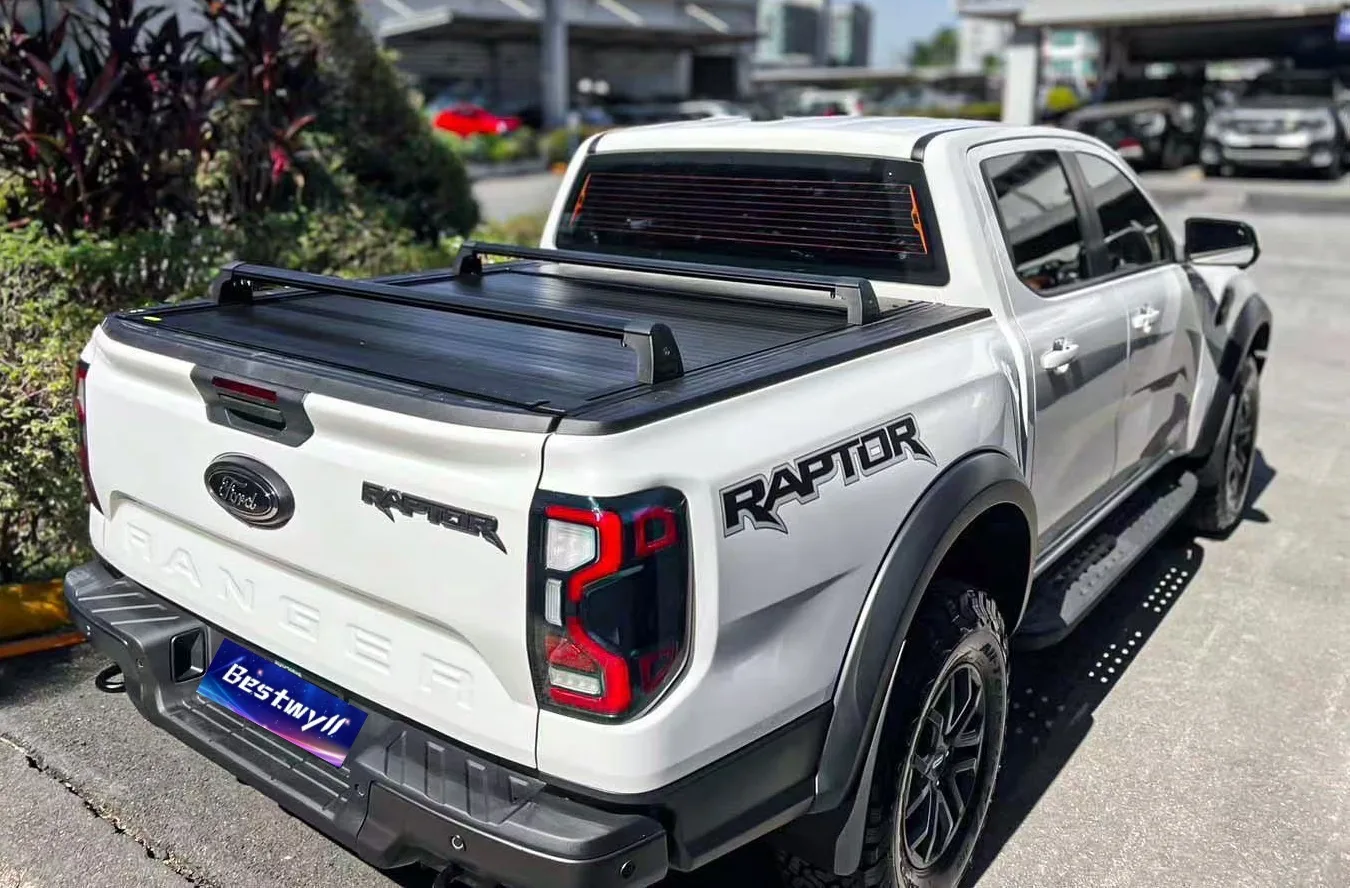
For pickup truck accessory distributors and retailers, choosing between a heavy-duty cross bar and a regular cross bar is not simply a matter of comparing prices. The right product needs to match the customer’s cargo requirements, vehicle configuration, installation preferences, and budget.
A regular cross bar may be sufficient for everyday cargo and recreational equipment. A heavy-duty cross bar, on the other hand, is designed for applications where buyers place greater emphasis on structural support, durability, cargo-securing options, and compatibility with additional truck accessories.
From our perspective, the biggest opportunity for dealers is to understand these differences and offer the right product for each customer segment instead of selling every cross bar as the same type of accessory.
In this guide, we will compare heavy-duty and regular cross bars, explain what wholesalers and retailers should check before purchasing, and discuss how to build a more competitive pickup truck accessory product line.
1. What Is the Difference Between a Heavy-Duty Cross Bar and a Regular Cross Bar?
A cross bar is a horizontal support bar installed across a vehicle’s roof, truck bed, rack system, or compatible canopy. It provides a mounting platform for cargo and accessories such as bicycle carriers, cargo baskets, outdoor equipment, and selected rooftop accessories.
The main difference between heavy-duty and regular cross bars is their intended application and overall structural design.
A regular cross bar generally targets everyday transportation and lighter recreational use. A heavy-duty cross bar is designed for more demanding applications, often incorporating a reinforced profile, stronger mounting interfaces, integrated tie-down points, or accessory mounting channels.
However, the term “heavy-duty” alone does not guarantee a specific load capacity. Actual performance depends on the complete system, including the bar profile, material, mounting brackets, fasteners, installation method, and vehicle or canopy load limits.
2. Heavy-Duty Cross Bar vs. Regular Cross Bar: A Comparison
| Feature | Regular Cross Bar | Heavy-Duty Cross Bar |
|---|---|---|
| Intended use | Everyday and recreational cargo | More demanding cargo and outdoor applications |
| Structural design | Often a simpler, lighter profile | May use a reinforced or wider profile |
| Material | Aluminum or steel, depending on the model | Often reinforced aluminum or steel |
| Load capacity | Depends on product design and mounting system | May support higher loads when properly engineered and rated |
| Accessory compatibility | Depends on bar dimensions and mounting interface | May offer additional mounting channels or tie-down features |
| Durability requirements | Suitable for its specified application | Intended for more demanding operating conditions when properly designed |
| Typical customer | Everyday pickup owner | Outdoor enthusiast, tradesperson, or equipment-carrying user |
| Retail positioning | Entry-level or general-purpose | Premium or application-focused |
| Sales opportunity | Broad everyday demand | Product differentiation and higher-value applications |
These are general market distinctions, not universal specifications. Some regular cross bars are engineered for substantial loads, while some heavy-duty models are designed for specific rack systems only. Buyers should compare documented specifications rather than relying on product names alone.
3. Load Capacity: The Most Important Difference to Verify
Load capacity is one of the first specifications a professional buyer should examine.
Customers may use cross bars to carry bicycles, camping equipment, cargo baskets, tools, or other outdoor gear. These applications do not all place the same demands on a support system.
For example, a customer carrying lightweight recreational equipment may not need a heavy-duty model. A customer planning to transport larger or heavier equipment may need a more robust system with a clearly documented load rating.
When evaluating load capacity, distributors should check three things.
First, confirm the rated capacity of the cross bar itself. Ask whether the stated rating applies to one bar, a pair of bars, or a complete rack system.
Second, check the mounting system. A strong bar cannot compensate for weak brackets, unsuitable fasteners, or an incompatible mounting surface.
Third, verify the vehicle or canopy limit. The permitted load for the complete installation may be lower than the cross bar’s own rating.
It is also important to distinguish static load from dynamic load. Static load refers to a stationary vehicle, while dynamic load refers to the load carried during movement. These ratings are not interchangeable.
From our perspective, a supplier that provides clear, application-specific load documentation is more valuable than one that simply advertises a high load figure without explaining its test conditions.
For retailers, this information also helps reduce incorrect product recommendations and potential after-sales disputes.
4. Material and Structural Design: Is Aluminum a Good Choice?
Aluminum is widely used in pickup truck cross bars because it offers a useful balance of low weight, corrosion resistance, and structural performance.
However, material alone does not determine strength. Aluminum alloy, wall thickness, cross-sectional geometry, reinforcement, joint design, and manufacturing quality all influence the final product.
When comparing heavy-duty and regular aluminum cross bars, wholesalers should pay attention to the following details:
- Aluminum alloy: Check the actual alloy specification rather than assuming all aluminum products have the same properties.
- Profile design: A wider or reinforced profile may improve stiffness when properly engineered.
- Joint construction: End connections and mounting interfaces must transfer loads reliably.
- Surface treatment: A suitable coating or finish helps protect the product during normal outdoor use.
- Fasteners and brackets: These components are essential to the performance of the complete installation.
A well-designed aluminum cross bar can be a strong option for customers who want useful load-carrying capability without adding unnecessary weight.
For dealers serving outdoor, off-road, and recreational markets, aluminum products may also provide an attractive alternative to heavier steel systems. The final choice should still depend on the application, engineering specifications, and budget.
5. Compatibility: Can a Heavy-Duty Cross Bar Work with a Tonneau Cover or Canopy?
For pickup truck accessory businesses, compatibility is one of the most important commercial considerations.
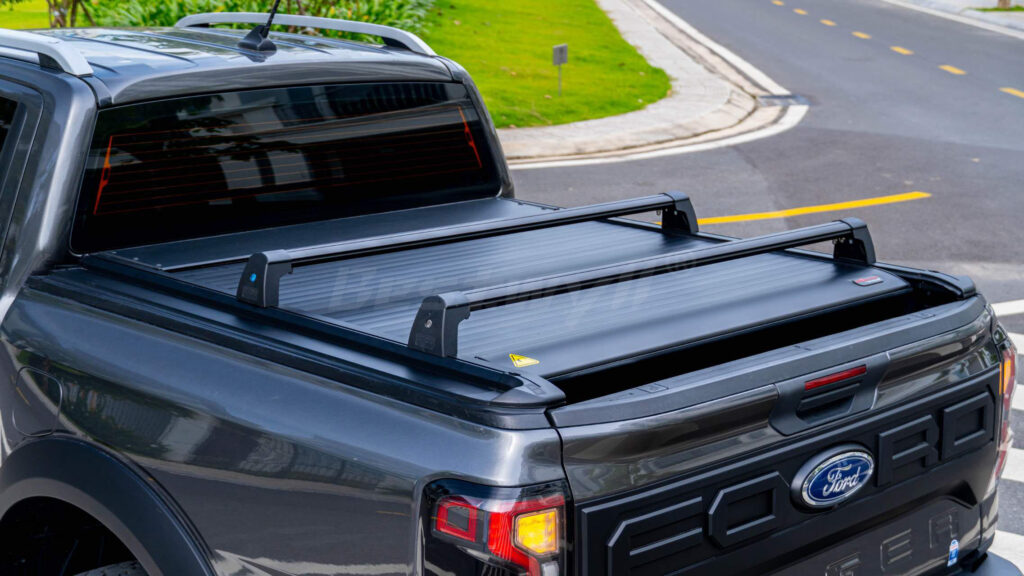
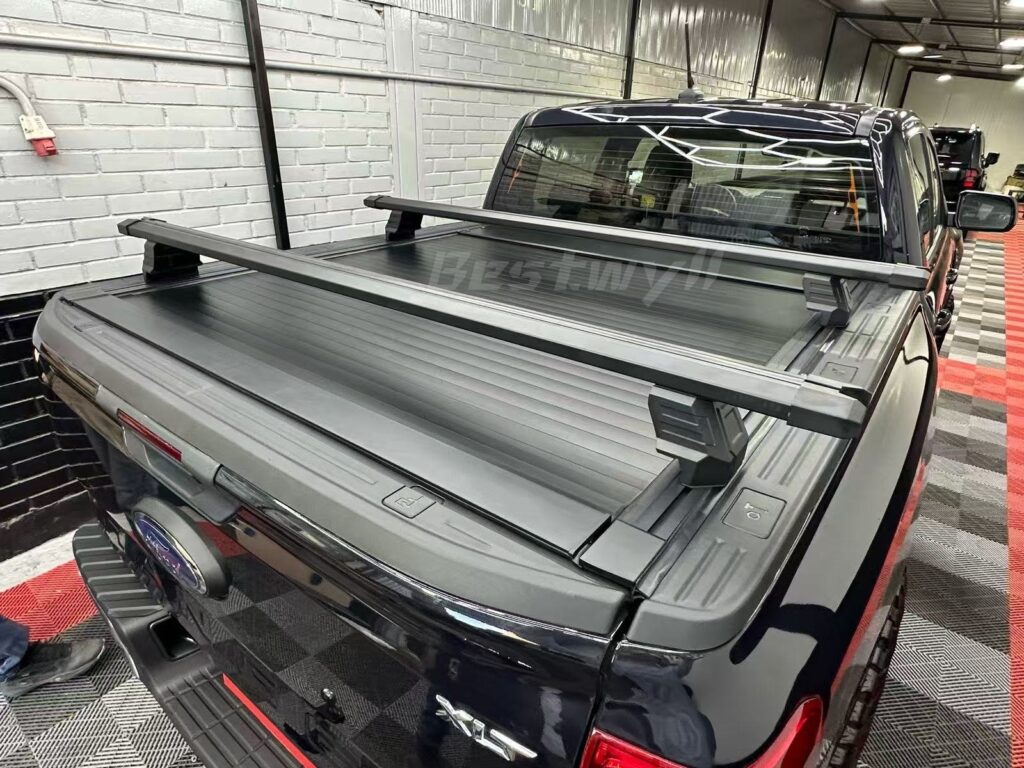
A cross bar is rarely purchased in isolation. Customers may want to combine it with a retractable tonneau cover, a truck canopy, a cargo basket, or other outdoor accessories.
A regular cross bar may be suitable for a straightforward installation, while a heavy-duty model may offer additional mounting features for specific accessories. Nevertheless, heavy-duty construction does not automatically mean universal compatibility.
Can a cross bar work with a retractable tonneau cover?
Yes, some cross bar systems are designed to work with compatible retractable tonneau covers. However, the fit depends on the cover’s rail design, mounting interface, available clearance, and specific vehicle application.
For example, Bestwyll offers an adjustable heavy-duty cross bar with a length range of 1,130–1,860 mm. It is designed to be compatible with selected Bestwyll retractable tonneau covers within a product length range of 1,250–1,980 mm, subject to the applicable configuration.
This type of compatibility can create a useful product-bundling opportunity for dealers: instead of selling only a truck bed cover, they can offer a more complete cargo-carrying solution.
The important point is to verify compatibility for the exact product combination before confirming an order.
6. Which Customers Should Buy Heavy-Duty Cross Bars?
Heavy-duty cross bars are particularly relevant to customer segments that need a more application-focused cargo solution.
Outdoor and camping customers
These customers may carry bicycles, camping equipment, cargo baskets, or other recreational accessories. They often value flexibility, secure mounting, and the ability to configure their pickup for different trips.
Off-road and adventure markets
Customers in this segment may want to combine a tonneau cover with additional cargo-carrying accessories. A compatible heavy-duty cross bar can help expand storage options while keeping the truck bed available for other equipment.
Tradespeople and commercial users
Some commercial users need to transport tools, equipment, or other cargo above the truck bed. For these buyers, clearly documented load ratings, secure mounting, and long-term durability are especially important.
Not every commercial customer needs a heavy-duty model, however. The product must be selected according to the actual cargo, installation configuration, and rated limits.
Pickup accessory retailers
Retailers can use heavy-duty cross bars to expand their product range beyond standard truck bed covers and basic mounting accessories. They can also target customers looking for a more versatile pickup setup.
In our view, this is one of the strongest reasons to stock both standard and heavy-duty options: they serve different customer needs rather than competing solely on price.
7. Why Heavy-Duty Cross Bars Can Create More Value for Dealers
For wholesalers and retailers, the value of a heavy-duty cross bar is not limited to its physical construction. It can also improve product differentiation and support accessory cross-selling.
1. Build a more complete product range
A practical product line could include:
- Regular cross bars for general-purpose applications.
- Heavy-duty cross bars for more demanding cargo requirements.
- Retractable tonneau covers for covered truck bed storage.
- Truck canopies for enclosed storage and selected roof-mounted accessories.
- Compatible racks and mounting accessories for specific applications.
This gives sales teams more options when customers have different budgets and use cases.
2. Create bundle sales
A compatible cross bar can be offered together with a retractable tonneau cover or canopy. This helps retailers sell a complete solution rather than an individual component.
For example, a dealer might create a package for outdoor enthusiasts that combines a retractable cover with cross bars for approved cargo accessories.
Compatibility must be confirmed before the package is marketed. A bundle should never imply that every bar fits every cover or that the combined system can carry more weight than its lowest-rated component allows.
3. Differentiate products beyond price
If every product in a store is presented as a generic cross bar, customers may focus mainly on price.
A more effective approach is to explain the intended application, construction, mounting features, adjustability, finish, and documented capacity of each model.
This makes it easier for customers to understand why two visually similar products may have different prices and specifications.
8. How to Position Heavy-Duty Cross Bars in Different Markets
Not every market needs the same cross bar specification. A useful purchasing strategy is to match the product range to the customers a distributor actually serves.
For price-sensitive markets: Offer a reliable regular cross bar with clear specifications and straightforward installation.
For outdoor and recreational markets: Prioritize compatibility with bicycles, cargo baskets, camping equipment, and other accessories customers commonly use.
For premium pickup accessory markets: Consider heavy-duty models with a robust profile, suitable mounting features, documented load capacity, and a finish that matches premium tonneau covers or canopies.
For commercial markets: Focus on the actual cargo requirements, rated capacity, fitment, durability, and availability of replacement hardware.
From our experience-based perspective, a balanced range is usually more practical than stocking only the most expensive model. A clear product ladder gives retailers an entry-level option while allowing them to recommend a higher-specification product when the application justifies it.
9. Why Consider Bestwyll Heavy-Duty Cross Bars?
For wholesalers, distributors, and retailers looking to expand their pickup truck accessory range, Bestwyll Heavy-Duty Cross Bars offer an option to consider alongside retractable tonneau covers and other truck bed accessories.
Key product features include:
- 6-series aluminum alloy construction for a lightweight, durable design.
- Adjustable length from 1,130 mm to 1,860 mm to accommodate a range of applicable configurations.
- Compatibility with selected Bestwyll retractable tonneau covers, subject to product dimensions and mounting requirements.
- Versatile cargo applications for suitable outdoor and off-road equipment.
- Optional customized logo for businesses seeking a more differentiated product offering.
For dealers, the practical advantage is the opportunity to build a more complete truck bed accessory range. A cross bar can complement a retractable cover and help customers make better use of their pickup for cargo transport and outdoor activities.
Before placing a bulk order, buyers should confirm the exact vehicle applications, mounting configuration, load specifications, packaging requirements, and available customization options.
If you are sourcing pickup truck accessories for distribution or retail, you can explore Bestwyll’s product range at www.bestwyll.com or contact the team at sales@bestwyll.com to discuss product compatibility and supply requirements.
Final Thoughts
The difference between a heavy-duty cross bar and a regular cross bar goes beyond appearance. Intended application, structural design, load documentation, mounting compatibility, and product quality all influence which option is right for a particular customer.
For wholesalers and retailers, the best strategy is to stock products that serve clearly defined market segments, explain the specifications accurately, and offer compatible accessories where appropriate.
Bestwyll Heavy-Duty Cross Bars are worth considering for businesses looking to build a more versatile pickup truck accessory range, particularly when paired with compatible retractable tonneau covers. By focusing on fitment, documented specifications, product quality, and practical customer needs, dealers can make more confident purchasing decisions and build a stronger product offering.