
Aluminum vs. Fiberglass Truck Canopy: Which Is Better for Distributors and Retailers?
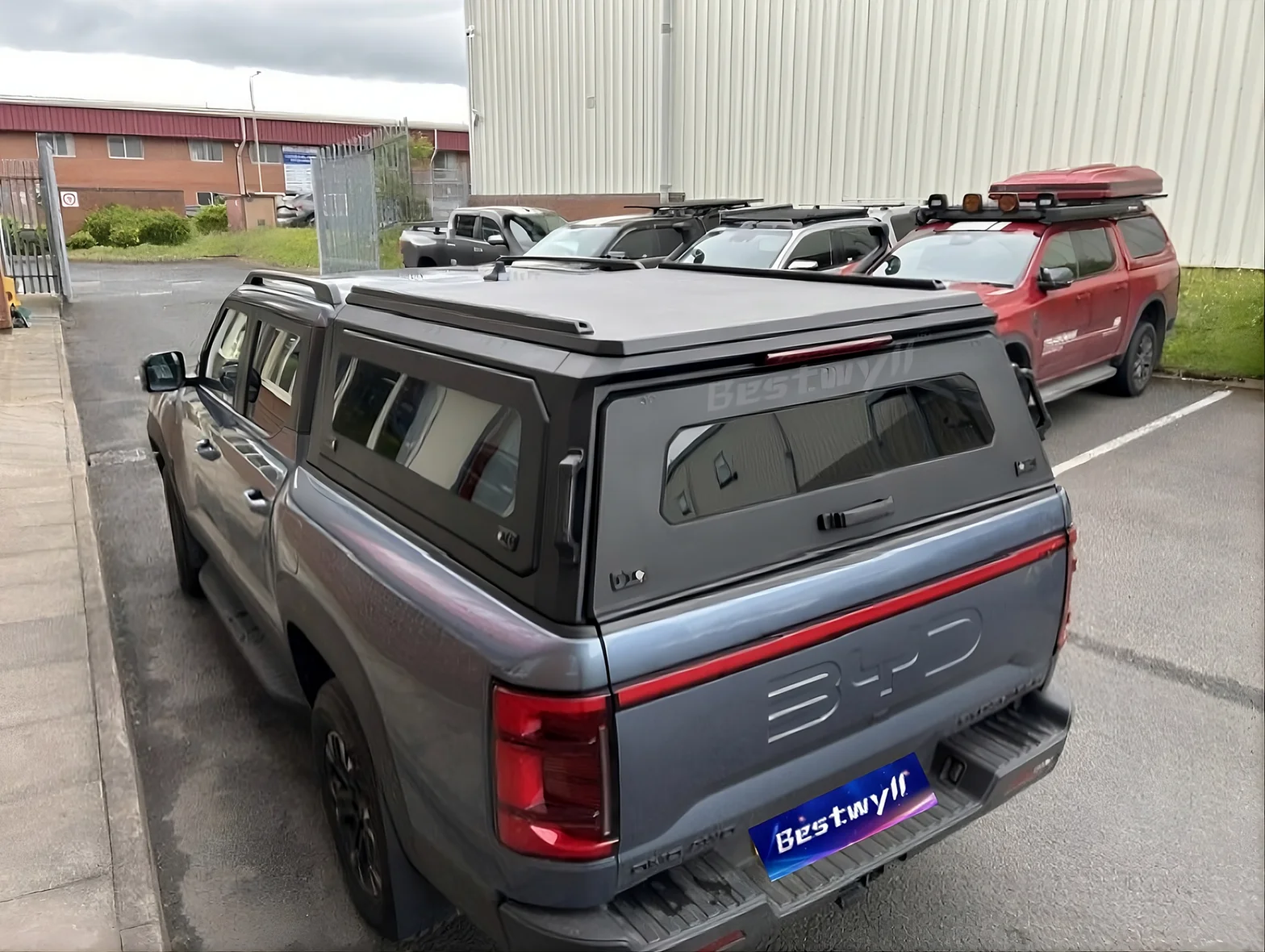
When customers are looking for a pickup truck canopy, the material is often one of the first things they compare.
Aluminum and fiberglass are two of the most common options, but they offer very different advantages in terms of durability, weight, appearance, customization, installation, maintenance, load capacity, and retail positioning.
For distributors and retailers, the question is not simply:
“Which material is better?”
A more useful question is:
“Which material is better for the customers and market I want to serve?”
From our experience in the pickup accessory industry, both aluminum and fiberglass can have a place in a well-designed product portfolio. However, for B2B buyers, aluminum truck canopies can offer some particularly attractive advantages when the target market values durability, practical functionality, customization, and commercial use.
This article breaks down the key differences and explains what distributors should consider before choosing a truck canopy supplier.
Aluminum vs. Fiberglass Truck Canopy at a Glance
Before going into the details, here is a practical comparison for B2B buyers:
| Factor | Aluminum Truck Canopy | Fiberglass Truck Canopy |
|---|---|---|
| Durability | High when properly engineered | Good, depending on construction |
| Weight | Generally lightweight for its strength | Can be relatively heavy |
| Corrosion resistance | Excellent with proper surface treatment | Excellent against rust |
| Appearance | Industrial / modern | Smooth molded appearance |
| Customization | Highly flexible | More dependent on mold design |
| Structural load potential | High | Depends on construction |
| Repairability | Relatively practical | Damage may require specialized repair |
| Commercial applications | Strong fit | Suitable for selected applications |
| Side panel customization | Flexible | More limited after molding |
| Accessory integration | Highly adaptable | Depends on design |
| Production flexibility | Suitable for varied configurations | Mold-dependent |
| Premium positioning | Functional / professional | Style-oriented / premium appearance |
The actual performance depends on the specific manufacturer’s design, materials, construction, and testing. Material alone does not determine product quality.
1. Why Material Choice Matters to Distributors
For an individual truck owner, choosing between aluminum and fiberglass may come down to appearance or personal preference.
For a distributor, the decision is much broader.
You need to consider:
- Target customers
- Vehicle applications
- Retail price
- Shipping cost
- Installation
- Warranty risk
- Product durability
- Customization requirements
- Accessory compatibility
- Inventory management
- Long-term market positioning
A canopy that works well for recreational pickup owners may not be the best choice for contractors or commercial fleets.
This is why we recommend that distributors define the application first and material second.
2. Aluminum Truck Canopy: What Makes It Attractive?
Aluminum is particularly well suited to pickup canopies where strength, weight, customization, and practical functionality are important.
A properly engineered aluminum canopy can provide a strong structure without adding excessive weight to the vehicle.
This makes aluminum especially interesting for:
- Commercial pickup trucks
- Contractors
- Outdoor businesses
- Camping and overlanding
- Service vehicles
- Fleet applications
- Customers who frequently carry equipment
For these users, a canopy is not simply an accessory that improves the appearance of the pickup.
It is part of the truck’s working system.
3. Aluminum Offers Strong Customization Potential
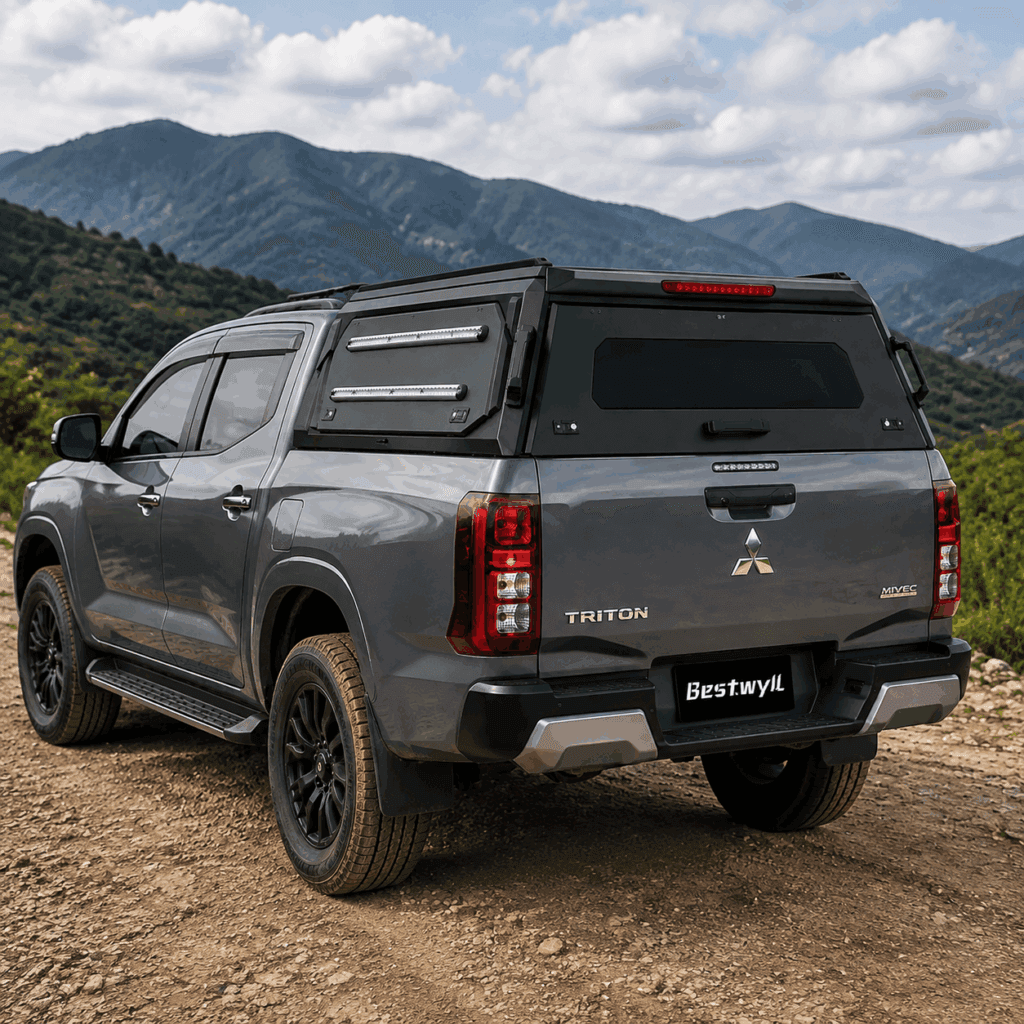
One of the biggest advantages we see with aluminum canopies is customization.
Aluminum panels and structural components can be configured in different ways depending on the customer’s application.
For example, a canopy can potentially be developed with:
- Side extension racks
- Side glass panels
- Custom side panels
- Roof-mounted accessories
- Cross bars
- Internal storage solutions
- Additional access doors
- Different window configurations
This is particularly valuable for OEM/ODM customers and distributors.
A retailer may only need a standard canopy.
But a distributor serving commercial customers may need a canopy with a completely different configuration.
Aluminum gives manufacturers considerable flexibility when developing these variations.
4. Fiberglass Canopies Offer a Different Type of Value
Fiberglass has a well-established position in the truck canopy market.
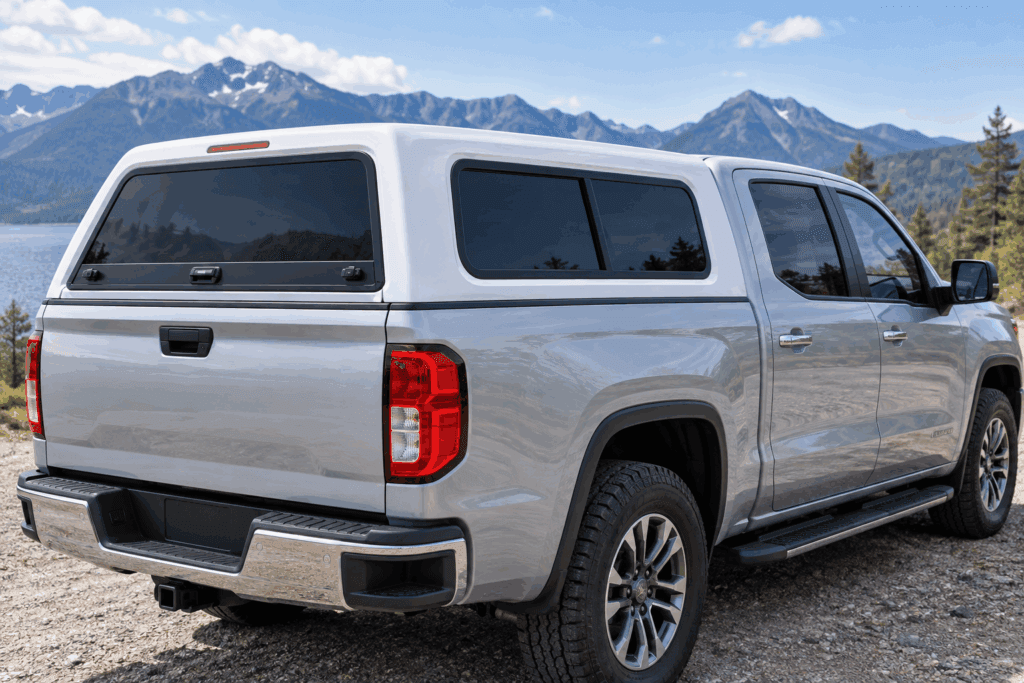
One of its biggest advantages is its ability to create smooth, molded exterior shapes.
This can make fiberglass canopies attractive to customers who prioritize:
- A clean appearance
- Integrated styling
- Smooth body lines
- Passenger-vehicle-like aesthetics
- Recreational use
For certain pickup markets, appearance can be a major purchasing factor.
A well-designed fiberglass canopy can visually integrate with the truck’s body and create a more unified appearance.
Therefore, fiberglass should not be considered an inferior material simply because aluminum has advantages in other areas.
It is better suited to different product positioning.
5. Aluminum vs. Fiberglass: Durability
Durability is one of the most important factors for commercial buyers.
Aluminum has a major advantage in applications where the canopy may experience regular physical use.
A properly engineered aluminum structure can provide strong resistance to everyday use.
Fiberglass can also be durable, but its performance depends heavily on the laminate structure, thickness, reinforcement, and manufacturing quality.
A distributor should therefore avoid judging durability purely by the material name.
Instead, ask the supplier:
- What is the panel construction?
- What reinforcement is used?
- What loads have been tested?
- How are mounting points reinforced?
- How does the canopy handle long-term vibration?
These questions reveal much more than simply asking whether the canopy is aluminum or fiberglass.
6. Load Capacity Is a Key Selling Point
Another important consideration is load capacity.
For customers who want to carry camping equipment, tools, ladders, or other outdoor gear, the canopy’s roof and structural design become important.
For example, a premium aluminum canopy may be designed to support substantial static loads when properly engineered.
Bestwyll’s canopy design, for example, is developed with a 500 kg static load capacity and 250 kg dynamic load capacity according to the supplied product specifications.
However, distributors should always communicate load ratings according to the manufacturer’s official specifications and intended application.
The key lesson is:
Do not compare materials based only on theoretical strength. Compare the actual tested product structure.
7. Aluminum Canopies Can Work Well With Cross Bars
This is another important consideration for distributors.
Many customers who purchase a canopy also want to carry equipment above it.
For example:
- Bicycles
- Kayaks
- Camping equipment
- Ladders
- Roof boxes
- Long cargo
This creates an opportunity to combine:
Truck Canopy + Cross Bar
A well-engineered aluminum canopy can be designed with suitable mounting points for cross bars and other accessories.
This can create a much more flexible pickup solution.
For retailers, it also creates a natural cross-selling opportunity.
Instead of selling only a canopy, you can offer a complete cargo solution.
8. Customizable Side Panels Can Be a B2B Advantage
This is one area where aluminum can be particularly attractive for OEM/ODM business.
Commercial customers may have very specific requirements for the side of the canopy.
For example, they may want:
- Side extension racks
- Glass panels
- Solid aluminum panels
- Access doors
- Equipment mounting points
- Custom branding
A modular aluminum structure can make these modifications easier to accommodate.
For distributors, customization also creates an opportunity to differentiate their product line.
Instead of selling the same generic canopy as every other retailer, you can develop a more market-specific configuration.
9. Waterproofing Depends on Design—Not Just Material
Neither aluminum nor fiberglass automatically makes a canopy waterproof.
Water resistance depends on:
- Panel joints
- Sealing strips
- Door seals
- Window seals
- Roof construction
- Drainage
- Installation
- Hardware
- Manufacturing quality
A premium aluminum canopy should therefore use carefully designed sealing systems.
For example, our canopy design focuses on waterproofing and ventilation, while the construction is designed to avoid exposed assembly screws on the top panel.
This type of detail matters because water leakage is one of the easiest ways to create after-sales complaints.
For distributors, I would always recommend testing the complete assembled product rather than evaluating individual panels.
10. Aluminum vs. Fiberglass: Which One Is Easier to Sell?
The answer depends on your target market.
If your customers prioritize:
Commercial use → Aluminum may be a strong fit
Customization → Aluminum may offer greater flexibility
Heavy-duty applications → Consider aluminum construction and tested load ratings
Outdoor equipment → Aluminum can be attractive
Smooth integrated styling → Fiberglass may appeal to certain customers
Vehicle-specific molded appearance → Fiberglass may have an advantage
OEM/ODM configurations → Aluminum can offer strong customization potential
This is why we don’t recommend positioning one material as universally better.
The better strategy for a distributor is to match the material to the market.
11. Why Choose Bestwyll for Aluminum Truck Canopies?
Bestwyll specializes in pickup truck accessories for international B2B markets, with more than 20 years of industry experience.
Our product range includes:
- Pickup truck canopies
- Retractable tonneau covers
- Truck ladder racks
- Heavy-duty cross bars
- Electric running boards
Our aluminum canopy solutions are designed with the needs of distributors, wholesalers, retailers, and OEM/ODM customers in mind.
Key design considerations include:
- Aluminum construction
- High load capacity
- Waterproof and ventilated design
- No-drill installation
- Customizable side panels
- Optional side racks or glass
- Compatibility with cross bars
- Practical maintenance and after-sales support
For B2B buyers, the goal is not simply to offer another generic truck canopy.
It is to provide a pickup cargo solution that can be adapted to different markets and customer applications.