
How Much Weight Can a Pickup Truck Canopy Hold? Static vs. Dynamic Roof Load Explained

When customers ask, “How much weight can a pickup truck canopy hold?”, the answer is not simply one number.
A professionally designed truck canopy should be evaluated based on at least two different load conditions:
- Dynamic roof load — the load the canopy can carry while the vehicle is moving
- Static roof load — the load the canopy can carry while the vehicle is stationary
This distinction is particularly important when the canopy is combined with cross bars, roof racks, rooftop tents, cargo baskets, kayaks, bicycles or other outdoor equipment.
For wholesalers and retailers, understanding these specifications is also commercially important. A canopy with clearly defined static and dynamic load ratings is easier to position professionally and can reduce confusion during installation and after-sales service.
This article explains what those numbers mean, how distributors should evaluate canopy load capacity, and why we believe a properly engineered aluminum canopy can be a strong addition to a premium pickup accessory product line.
Quick Answer: How Much Weight Can a Pickup Truck Canopy Hold?
There is no universal weight capacity for every pickup truck canopy.
The actual capacity depends on the canopy structure, mounting system, vehicle, load distribution and intended application.
| Load Type | Bestwyll Capacity | When It Applies |
|---|---|---|
| Dynamic Load | 180 kg | Vehicle is moving |
| Static Load | 350 kg | Vehicle is stationary |
The most important point is that 350 kg static does not mean 350 kg can be carried while driving.
When the pickup is moving, the applicable Bestwyll canopy roof rating is 180 kg dynamic.
What Is Dynamic Roof Load?
Dynamic load is the maximum rated roof load while the vehicle is moving.
This includes normal driving conditions such as:
- Highway driving
- Acceleration
- Braking
- Cornering
- Road vibration
- Speed bumps
- Potholes
The roof structure and mounting points experience forces that do not exist when the vehicle is parked.
This is why dynamic capacity is normally lower than static capacity.
What Is Static Roof Load?
Static load is the maximum rated load when the vehicle is stationary.
This is particularly relevant to applications such as:
- Rooftop tents
- Camping
- Sleeping in a rooftop tent
- Stationary outdoor equipment
- Heavy cargo temporarily placed on the roof
Because the vehicle is no longer experiencing normal driving forces, the structure can generally support a higher load when stationary.
Bestwyll Truck Canopy has a current 350 kg static roof load rating and 180 kg dynamic load.
That means the static rating is significantly higher than the dynamic rating:
350 kg static vs. 180 kg dynamic
This difference is normal for roof and rack systems.
Static vs. Dynamic Load: The Difference at a Glance
| Feature | Dynamic Load | Static Load |
|---|---|---|
| Vehicle condition | Moving | Stationary |
| Driving with cargo | Yes | No |
| Rooftop tent while driving | Must meet dynamic limit | Not applicable |
| Rooftop tent while parked | Not the applicable limit | Static limit applies |
| Road vibration | Considered | Not applicable |
| Braking/cornering forces | Considered | Not applicable |
| Camping with people in tent | Not applicable | Static load condition |
How Do You Calculate the Actual Dynamic Roof Load?
This is one of the most important questions for retailers.
Suppose a customer installs:
- Cross bars: 15 kg
- Rooftop tent: 65 kg
- Awning: 10 kg
- Other roof equipment: 15 kg
The total dynamic roof load is:
15 + 65 + 10 + 15 = 105 kg
That 105 kg—not just the 65 kg rooftop tent—is relevant when the vehicle is moving.
With a Bestwyll canopy rated at 180 kg dynamic, the canopy’s stated dynamic capacity is not exceeded by this example. However, the vehicle, rack, mounting hardware and accessories must also meet their own load limits.
This is a critical point for distributors:
The canopy rating is not automatically the rating of the entire roof system.
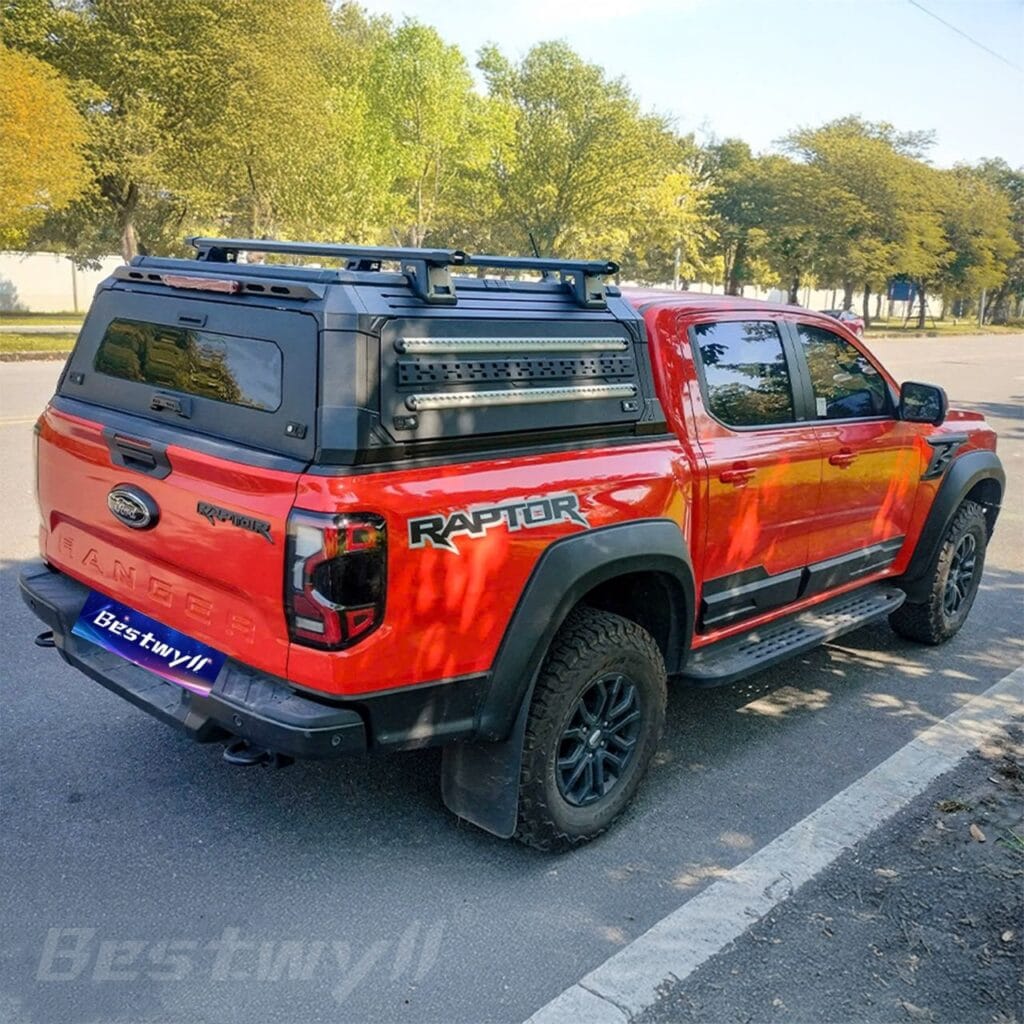
The Lowest Applicable Load Rating Matters
A complete setup may include:
Pickup Truck → Canopy → Mounting Hardware → Cross Bars → Rooftop Tent
Each component may have its own limitations.
For example:
| Component | Example Rating |
|---|---|
| Bestwyll Canopy | 180 kg dynamic |
| Cross Bar | 150 kg dynamic |
| Rooftop Tent System | 130 kg dynamic |
| Vehicle limitation | 120 kg dynamic |
In this example, you cannot simply advertise the system as having a 180 kg usable dynamic capacity.
The practical limit would be governed by the lowest applicable limitation.
This principle is also reflected in current roof-rack guidance: the rack, vehicle and mounting system all need to be considered together, rather than relying on the largest number appearing on one component.
Why Load Distribution Matters
A 150 kg load distributed across properly positioned mounting points is not necessarily equivalent to concentrating 150 kg in one small area.
The roof structure needs to transfer the load through:
Accessory → Cross Bar → Mounting Point → Canopy Structure → Truck
This is why professional canopy specifications should be considered together with:
- Mounting locations
- Structural reinforcement
- Rack design
- Hardware
- Load distribution
- Vehicle compatibility
Some manufacturers explicitly specify that their published load ratings depend on evenly distributed loads.
For wholesalers, this is an important supplier-evaluation point.
What Factors Determine a Truck Canopy’s Load Capacity?
The material is important, but it is not the only factor.
1. Aluminum Construction
Aluminum is attractive for truck canopies because it can provide a useful combination of:
- Low weight
- Corrosion resistance
- Structural performance
- Outdoor durability
However:
Aluminum does not automatically mean high load capacity.
Two aluminum canopies can have very different structural performance depending on their design.
2. Internal Reinforcement
The internal frame or reinforcement system can have a major effect on the canopy’s ability to transfer loads.
A canopy intended for roof accessories should be engineered around the expected load path.
3. Mounting Points
The mounting points need to transfer the load effectively.
Poorly positioned or insufficient mounting points can become a weak link even when the roof itself is strong.
4. Roof Structure
The roof may incorporate:
- Reinforcement profiles
- Structural beams
- Rails
- Mounting channels
- Reinforced connection areas
For distributors, asking “How is the roof reinforced?” can be more useful than simply asking “How thick is the aluminum?”
5. Canopy-to-Truck Connection
The canopy’s connection to the pickup bed also matters.
The load path is not just:
Roof → Rack
It is:
Roof → Canopy Structure → Mounting System → Truck Bed → Vehicle
A professional product specification should therefore consider the complete system.
Why We Recommend Bestwyll Truck Canopy for Distributors
For wholesalers and retailers, we believe a canopy should be more than an enclosed truck-bed cover.
It should become a platform for additional pickup accessories.
Bestwyll Truck Canopy uses an aluminum construction and is designed around practical commercial and outdoor applications.
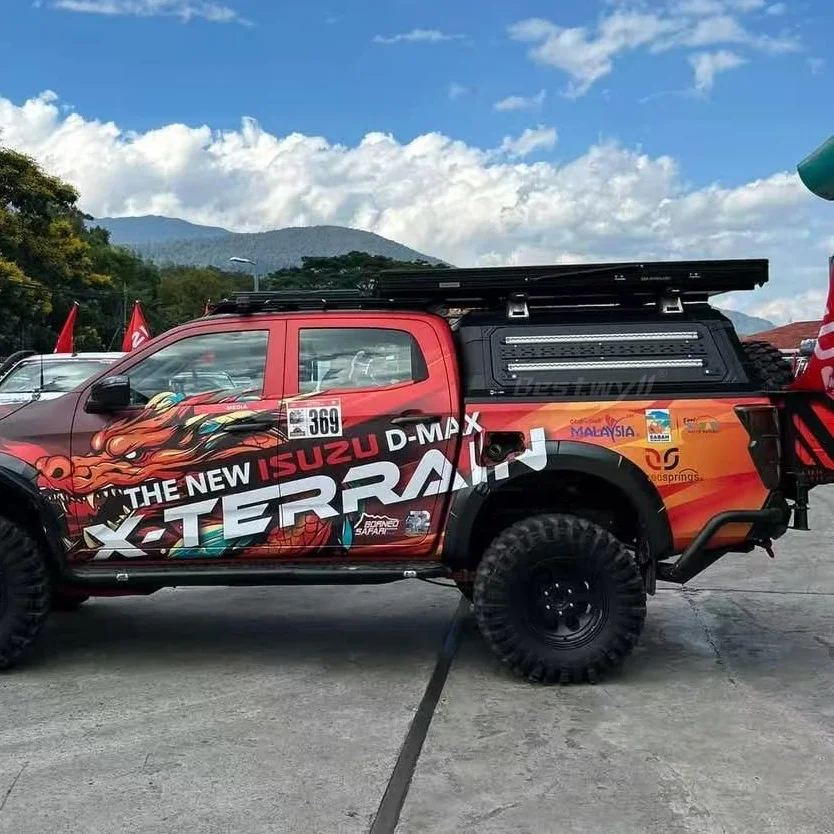
Bestwyll Truck Canopy — Key B2B Selling Points
350 kg Static Load Capacity
The current static roof load rating is 350 kg, providing a substantial capacity for stationary applications such as camping and rooftop equipment, subject to correct installation, load distribution and applicable system limitations.
180 kg Dynamic Load Capacity
The current dynamic roof load rating is 180 kg, which is the key figure to consider when the pickup is driving with roof-mounted equipment.
Aluminum Construction
The aluminum structure provides a practical combination of durability, weight control and corrosion resistance for commercial and outdoor applications.
Accessory Compatibility
The canopy can be combined with suitable cross bars, racks and other truck accessories, giving distributors opportunities to build a broader product ecosystem.
No-Drill Installation
The no-drill installation concept is an attractive selling point for retailers because it can reduce permanent modification of the customer’s truck and simplify installation.
Customizable Configuration
Different side configurations and accessory options can help distributors adapt the product to different markets and applications.
OEM/ODM Support
For wholesalers and retailers developing their own pickup accessory product range, OEM/ODM capability can be an important advantage.
FAQ: Pickup Truck Canopy Load Capacity
How much weight can a Bestwyll Truck Canopy hold?
Bestwyll Truck Canopy has a 350 kg static roof load capacity and 180 kg dynamic roof load capacity. The 180 kg rating applies to the rated dynamic condition while the vehicle is moving; the 350 kg rating applies to the stationary condition.
What is the difference between static and dynamic load?
Dynamic load applies while the pickup is moving. Static load applies when the pickup is stationary. Dynamic capacity is normally lower because driving introduces braking, cornering, vibration and impact forces.
Can I put a rooftop tent on Bestwyll Truck Canopy?
A rooftop-tent application should be evaluated based on the actual tent weight, rack weight, occupants, mounting system, vehicle limitations and Bestwyll’s applicable specifications. The tent and rack must remain within the applicable dynamic limit while driving and the static limit when parked.
Does the rooftop tent weight count toward the dynamic load?
Yes. The tent itself, rack, cross bars and other permanently mounted or carried roof accessories all contribute to the dynamic roof load while the vehicle is moving.
Does the crossbar weight count?
Yes. When calculating the total roof load, include the weight of cross bars, rack systems, mounting hardware and other roof-mounted accessories.
Is 350 kg static enough for a rooftop tent?
Potentially, depending on the tent, rack, occupants and complete installation. Static capacity must be evaluated using the actual total stationary load, while also respecting the vehicle and accessory manufacturers’ limits.
Is 180 kg dynamic enough for outdoor accessories?
It can be suitable for many crossbar, rack and outdoor-equipment configurations, but the actual combined weight must be calculated and compared with the lowest applicable limit of the canopy, vehicle, rack and accessories.
Why should distributors care about static and dynamic load ratings?
Because clear load specifications help retailers sell the product accurately, target different applications and reduce misunderstandings related to rooftop tents, racks and other accessories.