
Can a Pickup Truck Canopy Work with Roof Racks, Cross Bars and Other Accessories?
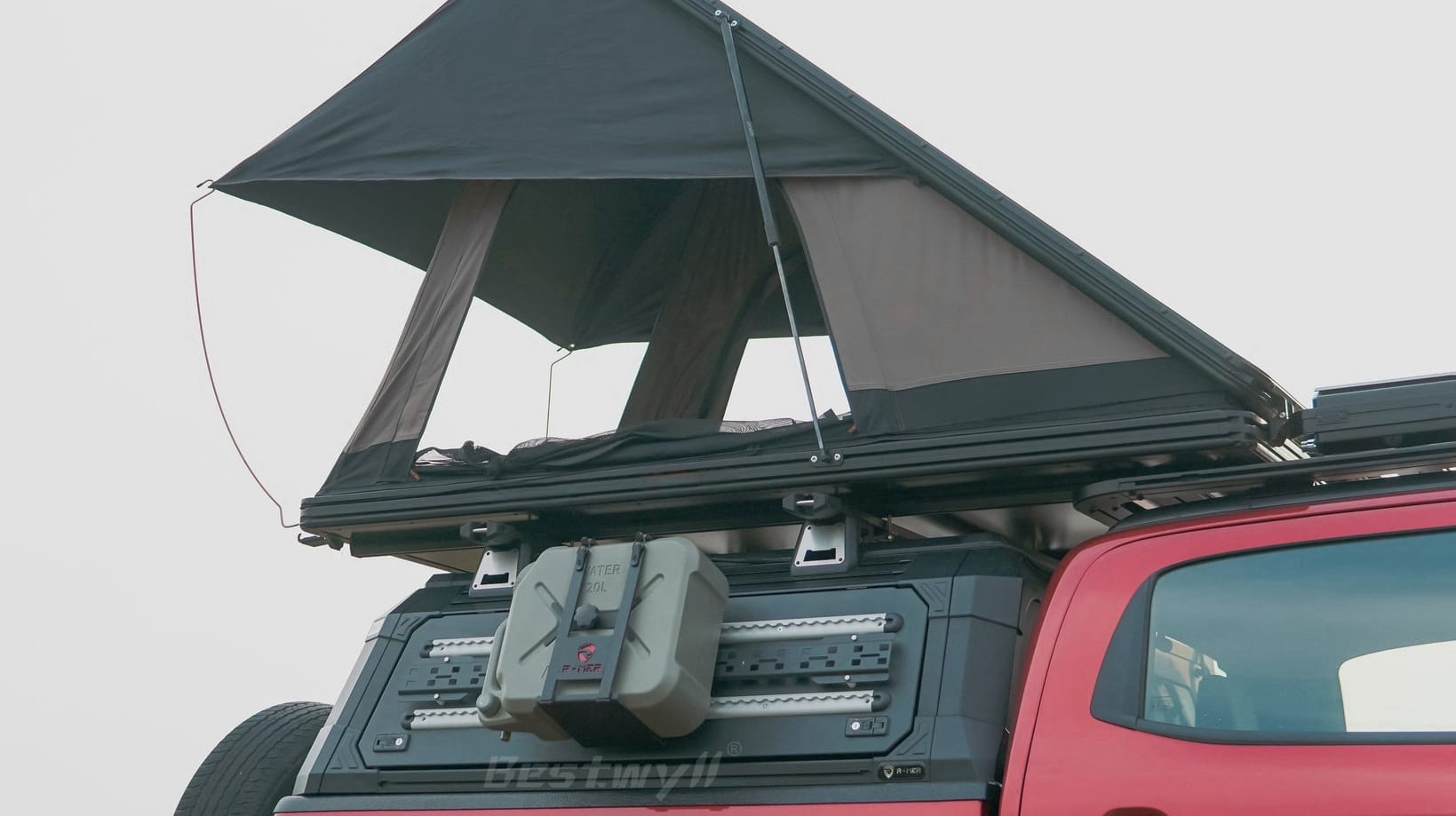
Yes, a pickup truck canopy can work with roof racks, cross bars and other accessories — provided that the canopy is designed or reinforced for the intended mounting system and the accessory’s load requirements.
For many pickup truck owners, a canopy is no longer just a way to cover the truck bed. It can become the foundation for a more versatile cargo system.
With the right design, a pickup truck canopy can work with roof racks, cross bars, cargo baskets, awnings, bike mounts, rooftop tents and other outdoor accessories. However, compatibility is not automatic. The canopy structure, mounting points, roof dimensions, load rating and accessory clearance all need to be considered.
For wholesalers and retailers, this is an important product-selection issue. A canopy that supports multiple accessory configurations can potentially serve more applications and create more opportunities for cross-selling.
In our experience, a good truck canopy should not be evaluated only as a standalone product. Its compatibility with racks and accessories should also be part of the purchasing decision.
There are several common configurations:
| Accessory | Can It Work with a Canopy? | Key Consideration |
|---|---|---|
| Cross bars | Yes | Mounting track and load rating |
| Roof rack | Yes | Roof structure and mounting points |
| Cargo basket | Yes | Crossbar spacing and capacity |
| Bike rack | Yes | Accessory mounting method |
| Kayak carrier | Yes | Crossbar width and load distribution |
| Rooftop tent | Yes, on suitable systems | Dynamic/static load rating |
| Awning | Yes | Mounting structure and cantilevered load |
| Solar panels | Yes | Roof space and mounting method |
| Ladder rack | Yes | Canopy/rack compatibility |
| Side accessories | Often | Side panel and mounting points |
The most important principle is simple:
The load capacity of the complete system is determined by the weakest relevant component, not simply by the rack itself.
Manufacturers and rack suppliers commonly specify that rack load ratings are subject to the canopy or topper manufacturer’s own limitations.
Why Canopy Accessory Compatibility Matters to Distributors and Retailers
From a consumer perspective, compatibility determines whether a product will work.
From a distributor’s perspective, it affects something more important:
How many customers can you sell the product to?
A canopy designed only for basic cargo protection has a relatively narrow application.
A canopy that can integrate with cross bars, racks and outdoor accessories can be positioned for:
- Work trucks
- Construction vehicles
- Outdoor recreation
- Camping
- Overlanding
- Cycling
- Kayaking
- Fishing
- Commercial transportation
- Service vehicles
- Long-distance travel
This creates opportunities for retailers to sell the canopy together with complementary products.
A typical product combination could be:
Truck Canopy → Cross Bars → Roof Rack → Bike/Kayak Carrier → Awning
Instead of selling one product, the retailer can potentially build a complete truck accessory solution.
This is one reason why we believe accessory compatibility should be considered during supplier selection, rather than after the canopy has already been purchased.
1. Can You Install Cross Bars on a Truck Canopy?
Yes, cross bars are one of the most common accessories used with truck canopies.
The basic concept is straightforward:
Canopy → mounting track/rail → rack feet → cross bar → accessory
Some canopies are designed with integrated tracks or mounting channels. In these cases, compatible crossbars can attach directly to the existing system.
For example, some truck canopy systems use factory roof tracks that allow crossbars to be installed without drilling into the canopy shell.
However, not every crossbar fits every canopy.
Before recommending a combination to customers, distributors should check:
- Mounting track type
- Track spacing
- Crossbar length
- Canopy roof width
- Mounting-foot dimensions
- Door clearance
- Roof curvature
- Maximum dynamic load
- Maximum static load
A rack may be technically wide enough for a truck but still unsuitable because the mounting points do not match the canopy.
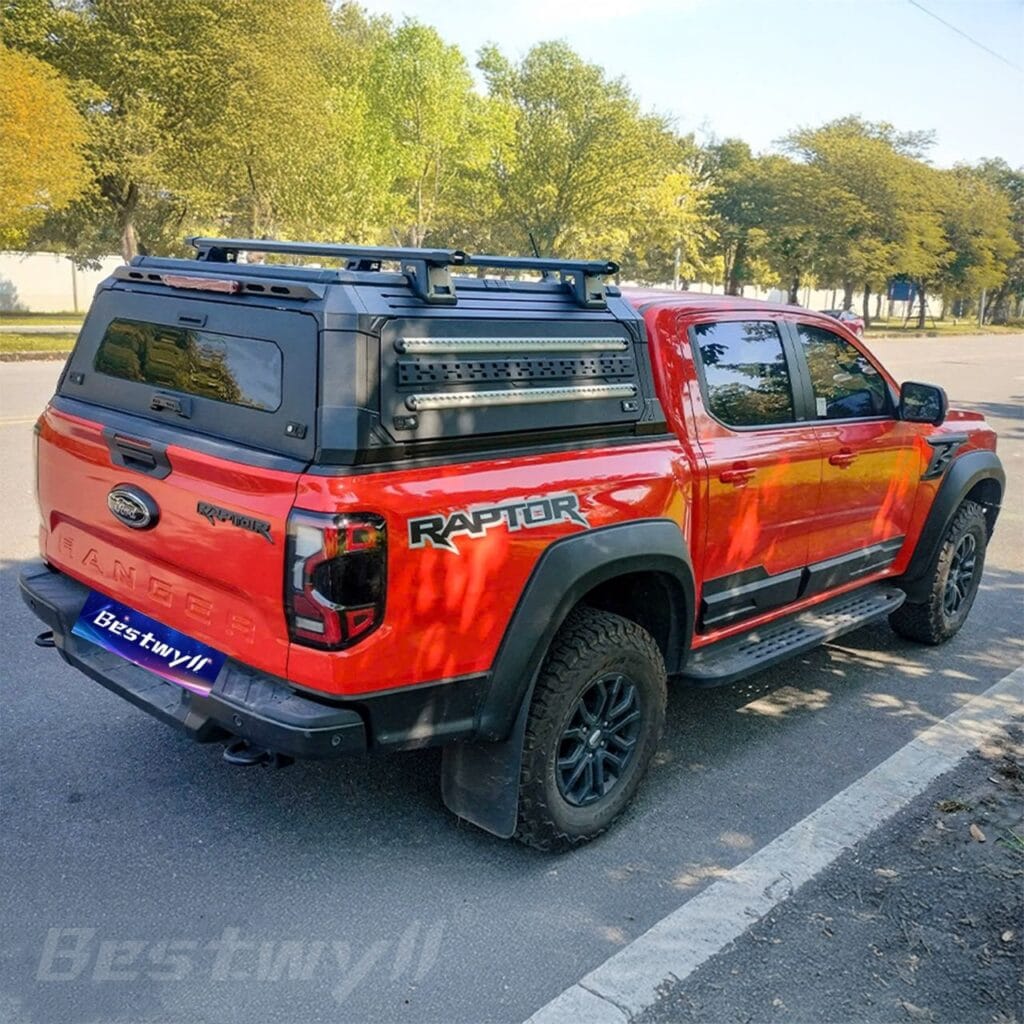
2. Can a Truck Canopy Work with a Roof Rack?
Yes. A canopy can serve as the mounting base for a roof rack system.
This is particularly useful for customers who need to carry equipment that cannot fit inside the truck bed.
A roof rack can provide additional space for:
- Camping equipment
- Ladders
- Long materials
- Bicycles
- Kayaks
- Cargo boxes
- Recovery equipment
- Rooftop tents
- Outdoor gear
Some aftermarket systems are specifically designed for truck toppers and can use existing track systems or adjustable mounting feet.
But this is where distributors need to be careful.
“Rack-compatible” does not automatically mean “load anything.”
The rack, mounting hardware and canopy all have their own limitations.
For example, a crossbar might have a certain load rating, while the canopy manufacturer specifies a different roof limit. The lower applicable rating should be respected.
For B2B customers, this is also an important after-sales consideration.
A supplier that provides clear information about:
- Mounting points
- Load capacity
- Recommended accessories
- Installation requirements
- Compatible rack systems
can help distributors reduce incorrect installations and customer complaints.
3. What About Rooftop Tents?
Rooftop tents are an increasingly important application for truck accessories, but they require more careful evaluation than a simple cargo box.
There are two different load conditions to consider:
Dynamic load
This refers to the vehicle moving with the equipment installed.
Static load
This refers to the vehicle being parked, when people or equipment may be resting on the system.
These two ratings can be very different. For example, one truck canopy system currently specifies separate dynamic and static ratings for its optional crossbars.
Therefore, retailers should never tell customers:
“The rack is strong enough, so any rooftop tent will work.”
Instead, the complete combination should be checked:
Canopy + mounting system + crossbars + tent + occupants + other equipment
For a supplier, providing clear load-rating documentation is therefore much more valuable than simply describing a canopy as “heavy duty.”
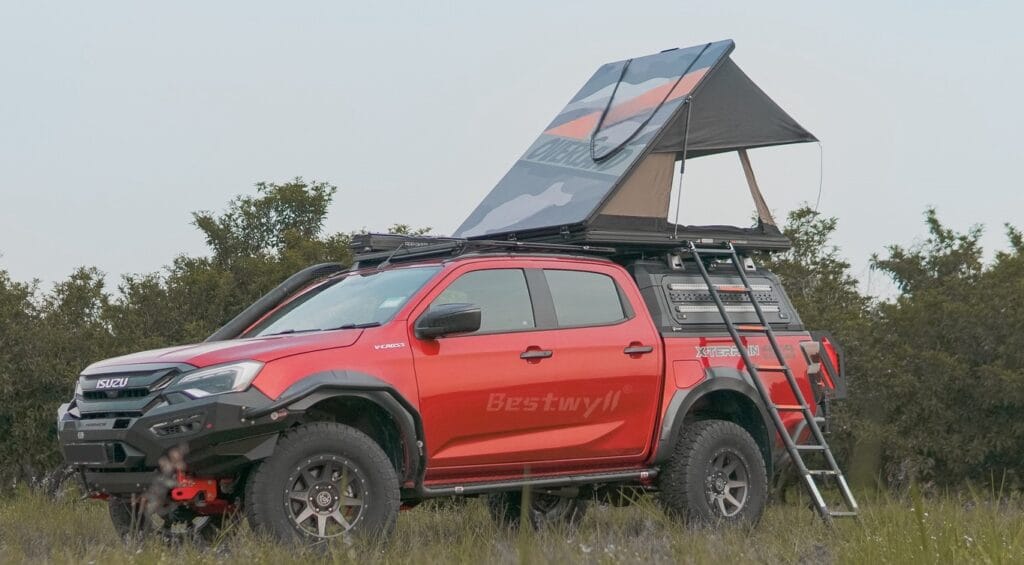
4. Can a Canopy Work with Bike Racks and Kayak Carriers?
This is one of the easiest ways to expand a truck canopy’s application range.
Once suitable cross bars are installed, customers can add different accessories depending on their lifestyle.
For cyclists
Cross bars can support bike carriers or other bicycle transportation systems.
For kayaking
A suitable crossbar system can provide mounting points for kayak carriers.
For outdoor recreation
Customers can use the same basic rack structure for:
- Cargo baskets
- Ski equipment
- Surfboards
- Camping equipment
- Storage boxes
This modularity is valuable from a retail perspective.
Instead of offering only:
“Truck Canopy”
you can create a product category around:
“Truck Canopy + Modular Cargo System.”
That gives retailers more opportunities to sell additional accessories.
5. What About Awnings?
Awnings are another accessory that can be mounted to suitable canopy rack systems.
However, awnings create a different type of load because they can extend outward from the vehicle.
This creates additional leverage on the mounting points.
Some canopy rack suppliers specifically recommend heavy-duty rack structures for large awnings because of the additional cantilevered load.
Therefore, when developing or sourcing a canopy for the outdoor market, distributors should consider more than just vertical weight.
A good accessory-ready canopy should also have:
- Strong mounting points
- Stable connection between the canopy and rack
- Appropriate roof reinforcement
- Adequate clearance
- Reliable hardware
- Clear installation instructions
6. What Should Distributors Check Before Buying a Truck Canopy?
If you are sourcing truck canopies for wholesale or retail distribution, I recommend checking these points before focusing on price.
1. Mounting structure
Ask:
- Does the canopy have integrated mounting points?
- Is there a roof track?
- Is reinforcement included?
- Can crossbars be installed?
2. Accessory compatibility
Ask the supplier whether the canopy can work with:
- Cross bars
- Roof racks
- Cargo baskets
- Bike carriers
- Kayak carriers
- Awnings
- Rooftop tents
3. Load rating
Request clearly defined:
- Dynamic load rating
- Static load rating
- Rack load rating
- Canopy load rating
Do not rely only on terms such as “heavy duty.”
4. Installation
Check whether the installation is:
- No-drill
- Clamp-on
- Track-mounted
- Bolt-on
The easier the installation, the easier it can be for retailers to sell to DIY customers.
5. Spare parts
For B2B buyers, ask whether the supplier can provide:
- Mounting brackets
- Seals
- Hardware
- Glass components
- Door components
- Replacement panels
This can make a significant difference after the product enters the market.
7. Why We Recommend Bestwyll Truck Canopy for Distributors
For wholesalers and retailers, we believe a truck canopy should be positioned as more than a simple truck-bed enclosure.
Bestwyll Truck Canopy is designed around the idea of combining cargo protection with practical accessory integration.
Its aluminum construction makes it suitable for customers looking for a lightweight but durable canopy solution, while the product can be configured with additional accessories such as side racks, glass options and cross bars.
Aluminum construction
A lightweight aluminum structure can make the canopy easier to handle while providing a durable solution for commercial and outdoor applications.
Accessory integration
The canopy can be combined with suitable cross bars and rack systems, allowing retailers to build a broader product offering.
No-drill installation concept
A no-drill installation approach can make the product more attractive to customers who want to avoid permanent modifications to their pickup.
Customizable design
Different side configurations and accessory options can help distributors adapt the canopy to different market requirements.
High load capacity design
For customers carrying tools, equipment or outdoor gear, load capacity is an important purchasing factor.
OEM/ODM support
For wholesalers and distributors, customization can provide opportunities to develop products for specific markets, truck models or customer requirements.
From our experience, these features are more useful for B2B customers than simply competing on the lowest canopy price.

8. A Truck Canopy Can Become a Product Platform
This is perhaps the most important commercial point.
A distributor does not necessarily have to sell the canopy as a single product.
Instead, consider the following product ecosystem:
Basic Package
Truck Canopy
↓
Cargo Package
Canopy + Cross Bars
↓
Outdoor Package
Canopy + Cross Bars + Roof Rack
↓
Adventure Package
Canopy + Rack + Awning + Rooftop Tent
↓
Commercial Package
Canopy + Rack + Ladder + Cargo Accessories
This type of product structure gives retailers more ways to serve different customers without completely changing the core product.
In our view, this is one of the strongest reasons for distributors to prioritize a modular truck canopy over a canopy designed only for basic storage.