
Power Running Boards: Convenience vs Traditional
Power Running Boards: Comparing Convenience with Traditional Options
When it comes to enhancing vehicle accessibility, power running boards stand out as a modern innovation in automotive accessories. These retractable steps automatically deploy when doors open, providing a stable platform for entry and exit, especially useful for trucks and SUVs. Unlike fixed running boards, power running boards offer a blend of functionality and aesthetics, making them a popular choice for drivers seeking both practicality and style. This article explores the comparison and contrast between power running boards and traditional alternatives, highlighting their features, benefits, and potential drawbacks to help you decide which option best suits your needs.
Design and Functionality: Power Running Boards vs. Fixed Running Boards
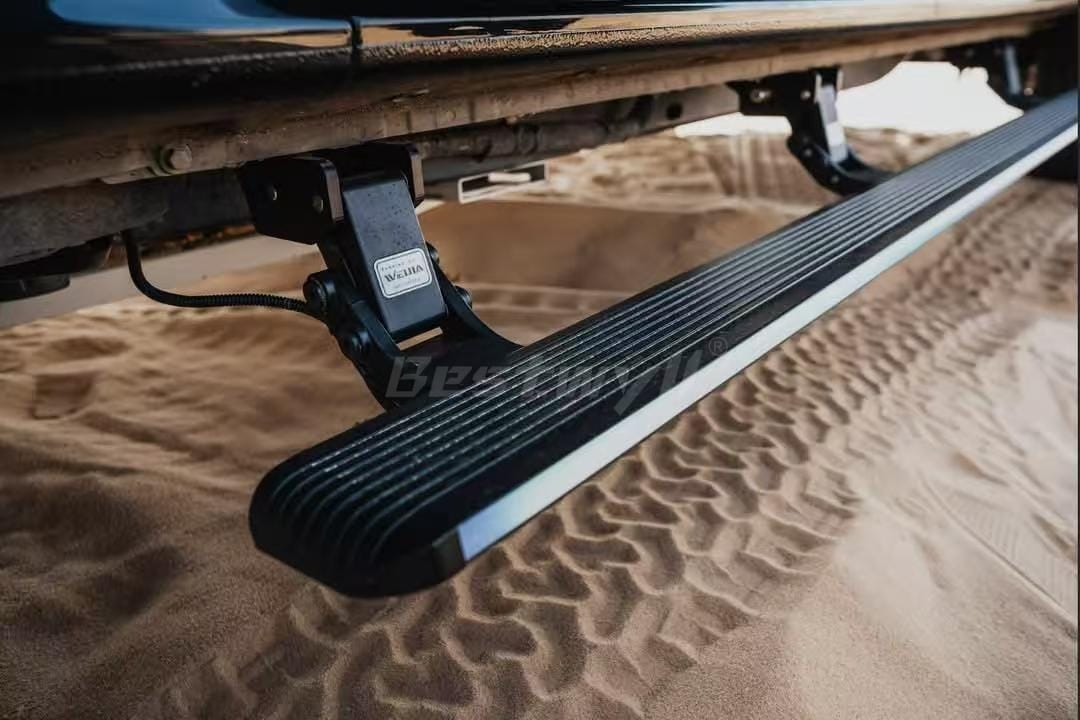
Power running boards feature an automated mechanism that extends outward and downward upon detecting a door opening, typically powered by electric motors and sensors. This design ensures they remain tucked under the vehicle when not in use, reducing drag and maintaining a sleek profile. In contrast, traditional fixed running boards are permanently attached and always visible, offering constant support but adding bulk to the vehicle’s undercarriage. While power running boards provide effortless deployment—ideal for families with children or elderly passengers—fixed boards excel in simplicity, requiring no electricity or maintenance of moving parts. However, the automated nature of power running boards can sometimes lead to issues like sensor malfunctions in harsh weather, whereas fixed boards are more reliable in extreme conditions but may complicate off-road maneuvers due to their static position.
One key advantage of power running boards is their space-saving aspect. By retracting fully, they minimize ground clearance loss, which is crucial for drivers navigating uneven terrain. Fixed running boards, on the other hand, can lower the effective height of the vehicle, potentially scraping on rocks or curbs during adventures. Yet, for urban commuters, the constant presence of fixed boards offers immediate access without waiting for any mechanism to activate, contrasting the slight delay in power boards’ extension, which averages 1-2 seconds. Material-wise, both options often use aluminum or steel for durability, but power running boards frequently incorporate anti-slip coatings and LED lighting for enhanced safety at night, features less common in basic fixed models unless upgraded.
Installation and Maintenance: Weighing the Differences
Installing power running boards typically involves professional assistance due to the wiring required for integration with the vehicle’s electrical system. This process can take several hours and may void certain warranties if not done correctly, presenting a steeper learning curve compared to the bolt-on simplicity of fixed running boards. Fixed options can often be DIY-installed in under an hour with basic tools, making them more accessible for budget-conscious owners. Maintenance for power running boards includes periodic checks on motors, hinges, and batteries, which might incur higher long-term costs—potentially $200-500 annually if repairs are needed—while fixed boards demand minimal upkeep, mainly cleaning and occasional tightening of bolts.
Despite these challenges, the convenience of power running boards justifies the effort for many. They automatically adjust to the vehicle’s movements, folding away to prevent damage during low-clearance parking, a feature absent in fixed boards that can get dented or bent easily. In snowy or muddy environments, power running boards’ retraction helps keep them cleaner, reducing corrosion risks, whereas fixed boards accumulate debris more readily. However, in high-use scenarios like construction sites, fixed running boards’ robustness shines, as they withstand heavy loads without the vulnerability of mechanical failures that plague power variants. Cost is another contrasting factor: power running boards range from $1,000 to $3,000, reflecting their tech-heavy build, while fixed ones start at $300, appealing to those prioritizing affordability over automation.
Performance in Various Scenarios: A Closer Look
In everyday driving, power running boards enhance user experience by bridging the gap between high ground clearance and easy access, particularly for taller vehicles like the Ford F-150 or Chevrolet Silverado. They deploy smoothly, supporting up to 600 pounds, and retract to avoid pedestrian hazards in tight spaces. Traditional fixed running boards, conversely, provide unwavering stability for frequent entries, such as in commercial fleets, but their permanence can increase fuel consumption slightly due to added weight and wind resistance—up to 1-2 MPG loss, per some studies. Power boards, being retractable, mitigate this by folding away, potentially saving on gas over long hauls.
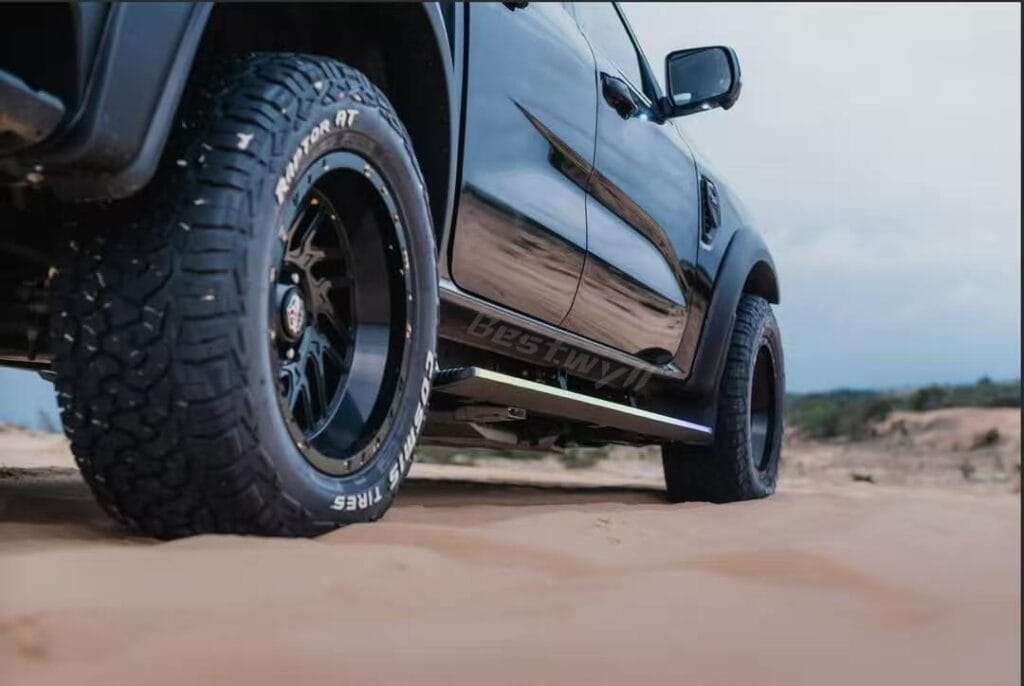
For off-road enthusiasts, the contrast becomes stark. Power running boards may retract to preserve articulation, but their mechanisms can falter in dust or water, leading to stuck positions that hinder mobility. Fixed running boards, designed for rugged use, offer better protection against underbody impacts and serve as rock sliders in trails, though they reduce departure angles. In urban settings, power running boards’ clean look appeals to style-focused drivers, hiding away to showcase the vehicle’s lines, unlike the utilitarian vibe of fixed boards. Safety data from the National Highway Traffic Safety Administration indirectly supports both: automated steps reduce fall risks by ensuring timely deployment, while fixed ones prevent tripping over uneven surfaces.
Aesthetic preferences also play a role in the comparison. Power running boards contribute to a high-tech, luxurious feel, often customized with chrome or black finishes to match premium trims. Fixed boards, available in various styles from nerf bars to hoop steps, cater to a broader customization range but can appear dated on modern vehicles. Environmentally, power boards’ electric operation aligns with efficiency trends, though battery disposal poses minor concerns, contrasting the recyclable simplicity of fixed steel models. Ultimately, the choice hinges on lifestyle: power running boards suit tech-savvy, convenience-driven users, while fixed options favor durability and cost savings.
Safety and Longevity: Contrasting Reliability
Safety features in power running boards include automatic reverse mechanisms if obstructed, infrared sensors for detection, and robust construction to handle dynamic loads. These elements reduce injury risks during use, especially in low-light conditions with integrated lights. Fixed running boards rely on their solid build and wide treads for secure footing, but lack automation, potentially leading to overlooked hazards like ice buildup. Longevity-wise, high-quality power boards from brands last 5-10 years with proper care, backed by warranties up to lifetime on motors. Fixed boards often endure 10-15 years, with fewer failure points, making them a low-maintenance staple.
In extreme weather, power running boards’ seals protect against moisture, but extreme cold can slow motors, delaying deployment. Fixed boards perform consistently but may rust without powder coating. For families, power boards’ ease prevents strains from lifting into vehicles, contrasting the physical effort sometimes needed with fixed ones on very tall trucks. Fuel efficiency studies, such as those from the EPA, note minimal impacts from either, but retractable designs edge out in aerodynamics. When contrasting user reviews on platforms like Amazon or forums like TruckTrend, power running boards score high on innovation (4.5/5 average), while fixed ones lead in value (4.7/5), underscoring their respective strengths.
In summary, power running boards revolutionize accessibility with smart automation and a streamlined appearance, outperforming fixed boards in convenience and versatility for modern drivers. However, traditional fixed running boards hold their ground in reliability, affordability, and rugged applications, offering a no-fuss alternative. By weighing these comparisons, vehicle owners can select the enhancement that aligns with their driving habits, ensuring both safety and satisfaction on the road.
 Friulian
  English
  Chinese
  German
  French
  Japanese
  Korean
  Russian
  Turkish